St. John's
Inflation picked up in March, and much of that shift came from one place: energy.
Canada’s Consumer Price Index rose 2.4% compared with a year earlier, up from 1.8% in February, finds Statistics Canada. On a monthly basis, prices jumped 0.9%, or 0.5% when adjusted for seasonal factors. The increase was largely tied to rising energy costs, especially gasoline.
Gas prices stood out. Drivers paid 5.9% more than they did a year ago, but the real jolt came month to month, with prices surging 21.2%. That is the largest monthly increase on record, linked to supply disruptions tied to the conflict in the Middle East. Other fuels followed a similar trend, with fuel oil and related products up 26.1% year over year. Natural gas moved in the opposite direction, falling 18.1% due to steadier North American supply.
Food prices continue to press upward, though the pace varies depending on where people shop. Grocery prices rose 4.4% annually in March, slightly slower than in February. Fresh vegetables were a key pressure point, jumping 7.8%, the biggest increase since August 2023. Shoppers likely noticed higher prices for cucumbers, peppers, and celery, with a tighter supply linked to poor growing conditions in producing countries.
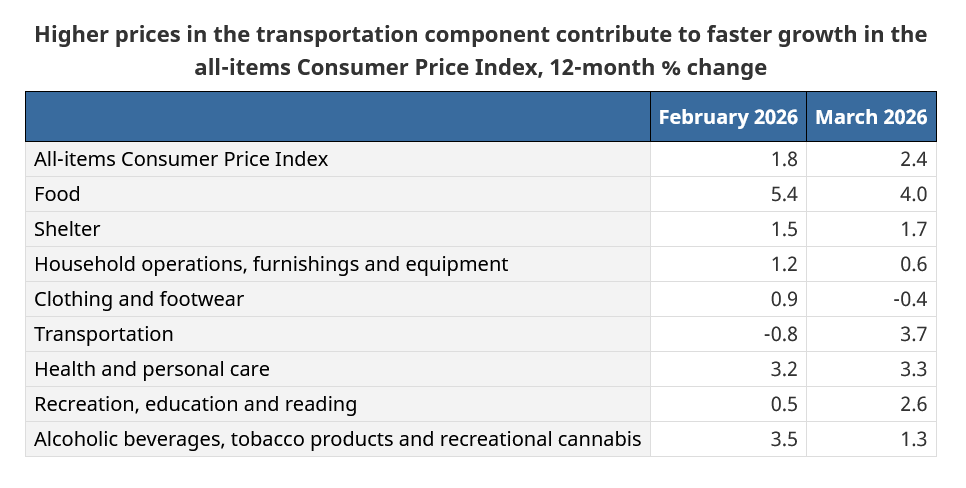
Source(s):Table 18-10-0004-01./Statistics Canada
Not everything moved up as quickly. Restaurant prices rose 3.2%, a slower pace than February’s 7.8%, largely because of how last year’s tax changes are now reflected in the data. The earlier GST and HST break, which ended in early 2025, is still influencing comparisons and slightly dampening overall inflation figures.
Across the country, every province saw faster price growth in March. Ontario’s inflation rate reached 1.9%, while Nova Scotia and Manitoba both hit 3.0%. Quebec saw the smallest acceleration, with prices rising 2.9%, helped by slower rent increases.
Excluding gasoline, inflation came in at 2.2%, suggesting broader price pressures are still present, even if energy is driving the headline number.