Kelowna
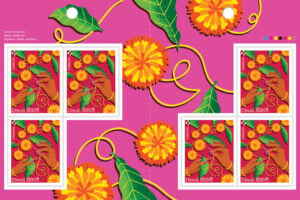
Today marks the first annual National Ribbon Skirt Day.
Ribbon Skirts are worn by women, girls and gender-diverse people to celebrate their Indigenous identity and heritage and are representative of a person’s unique diversity and strength.
“Whereas the ribbon skirt is a centuries-old spiritual symbol of womanhood, identity, adaptation and survival and is a way for women to honour themselves and their culture; Whereas the ribbon skirt represents a direct connection to Mother Earth and its sacred medicines,” reads the preamble of Bill S-219, An Act Respecting a National Ribbon Skirt Day which received royal assent last December.
The experience of Isabella Kulak, a member of Cote First Nation in Saskatchewan, who was shamed for wearing her ribbon skirt on a school formal wear day inspired the movement which resulted in the day being designated to provide an opportunity for everyone in Canada to recognize, learn about, and celebrate the importance of Indigenous traditions and expressions of culture.
This Bill was passed thanks to the commitment and leadership of Isabella Kulak, her family, Chief George Cote of the Cote First Nation, Treaty 4 Territory in Saskatchewan, Senator Mary Jane McCallum, and Jenica Atwin, Member of Parliament for Fredericton, who began advocating for this day after Isabella was shamed for wearing her Ribbon Skirt to school.
Prime Minister Justin Trudeau said in a statement, “Isabella’s story shone a light on the enduring injustices, racism, and discrimination faced by First Nations, Inuit, and Métis in Canada every day, and on the importance of the role we all have to play in making sure that what happened never happens again to anyone in Canada.”
“This National Ribbon Skirt Day, I invite everyone to learn from Indigenous Peoples about their cultures and histories – from languages to traditional ceremonies and regalia to ancestral ties to the land. Together, let us amplify Indigenous voices and stand up against racism and discrimination to build a better society for everyone.”
January 4th was chosen as it was on that day in 2021 that Isabella returned to her school after the incident and she was welcomed into the school with drumming.
According to Kiddle, “Silk ribbons, brought to North America by European traders, inspired a new, uniquely Native American art form. Mi’kmaq people created ribbon appliqué as early as 1611. In 1789 the regime of the French Revolution decreed that clothing should be plain, so silk ribbons fell out of fashion in France and were exported to North America. Those tribes who traded furs with the French are most known for their ribbon work, such as the Kickapoo, Mesquakie, Miami, Odawa, Ojibwa, Osage, Otoe-Missouria, Potawatomi, and Quapaw, but the practice has spread to many other tribes. Initially, layers of ribbons were sewn on the edges of cloth, replacing painted lines on hide clothing and blankets. By the close of the 18th century, Native seamstresses created much more intricate appliqué ribbon work designs.”