 Winnipeg
The Canadian rental market experienced an overall increase of 6.5% in May 2023, the smallest annual increase since December 2021, according to the latest National Rent Report from Rentals.ca and Urbanation.
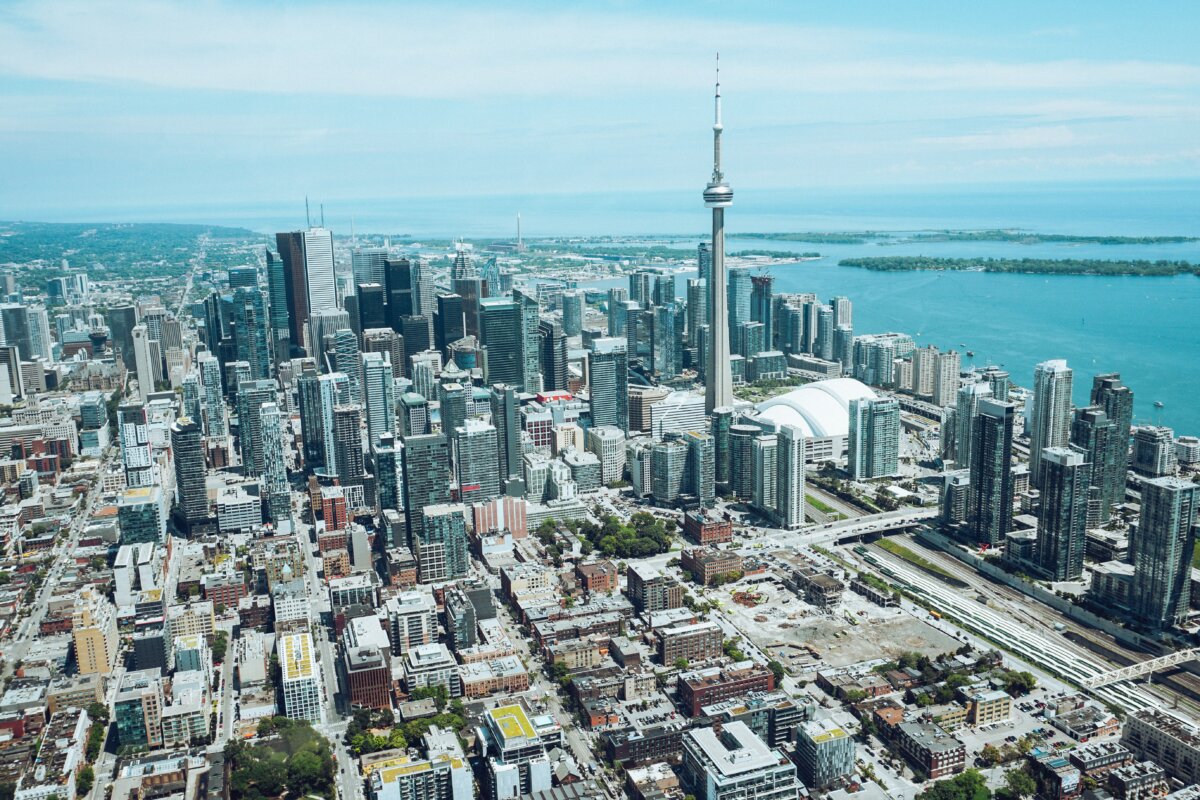
Despite this slow growth, average rents have surged by 19% over the past two years, with an average monthly increase of 0.6% to $2,014 in May.
The trend is set to continue with rising immigration and escalating home buying costs. Matt Danison, CEO of Rentals.ca, warns of a ‘Boomerang Generation’ of Gen Z, who might have to move back in with parents or share rent, as it becomes unaffordable for many Canadians. Both Rentals.ca and Urbanation stress the need for inventive housing supply solutions from all government levels.
Shaun Hildebrand, President of Urbanation, predicts the rental market will intensify over the summer, largely due to an expected surge in international students and decreasing homeownership affordability as interest rates climb.
Roommate Rents
Credit: Rentals.ca
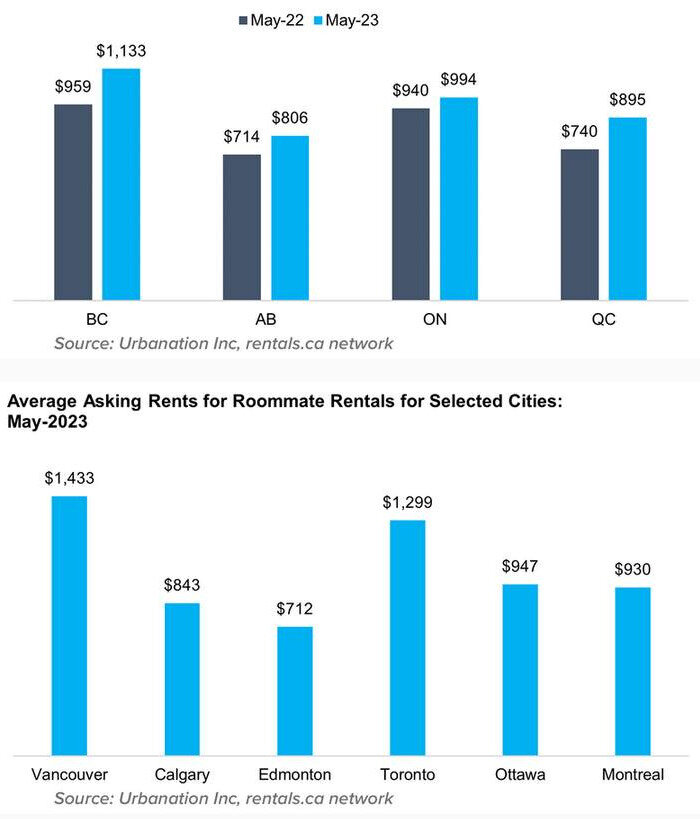
According to the May rental report, roommate rentals are witnessing a spike in demand, driving up their rents amid soaring rental costs in Canada. This has led to Vancouver and Toronto witnessing average roommate rents of $1,433 and $1,299, respectively, well over the $1,000 mark.
British Columbia experienced an 18% rise from last year, reaching an average roommate rent of $1,133. Meanwhile, Ontario, Quebec, and Alberta saw roommate rents averaging at $994, $895, and $806, respectively, indicating a nationwide surge in shared accommodation prices.
National Rent Rankings
Credit: Rentals.ca
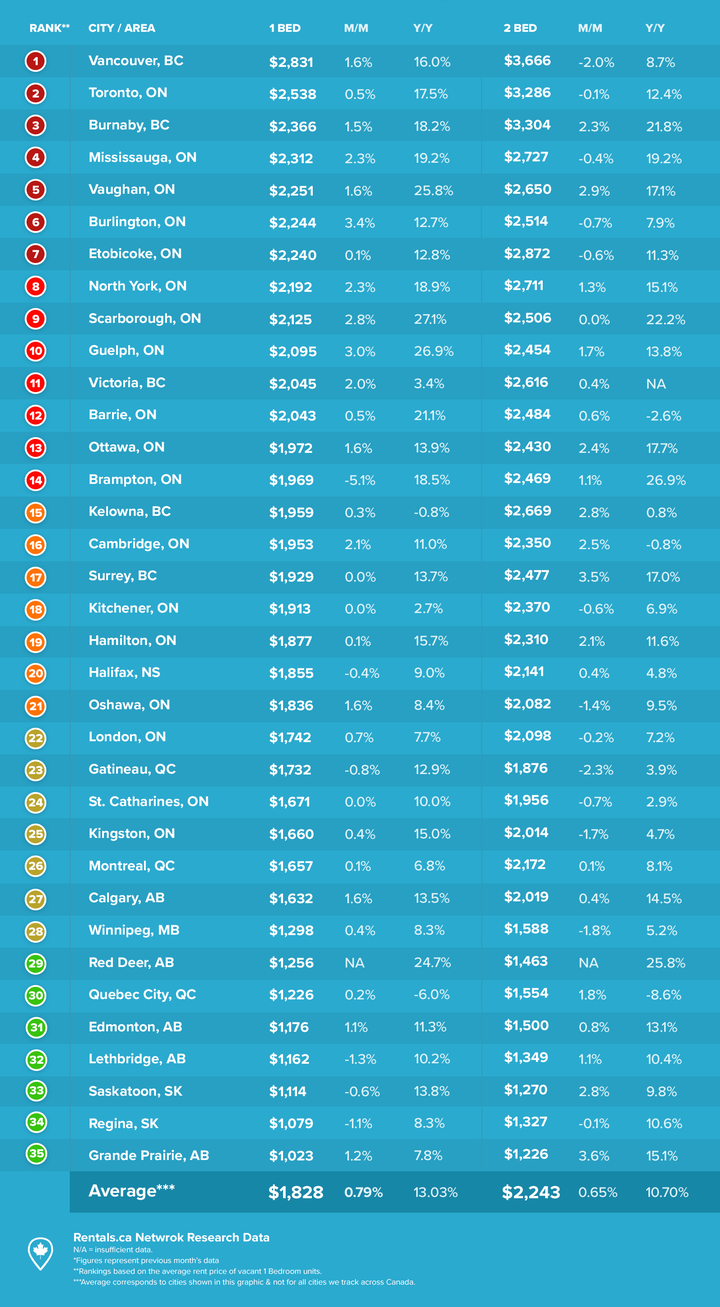
Vancouver maintained its position as the city with the highest average monthly rent among 35 cities, with a one-bedroom home averaging at $2,831 and a two-bedroom at $3,666 in May. Toronto followed, with average rents of $2,538 and $3,286 for one-bedroom and two-bedroom homes, respectively. Montreal stood 26th with one-bedroom homes at $1,657 and two-bedroom homes at $2,172.
In terms of annual rents, Toronto topped with $2,808 for purpose-built and condominium rentals, a 15.5% increase. Calgary and Ottawa followed, each with a 14.6% annual increase, reaching averages of $1,944 and $2,134, respectively. Vancouver, while being the most expensive city with average rents at $3,137, saw its annual growth rate slow down to 9.7%.
Ontario mid-sized cities dominated the list for the fastest-rising condo rentals and apartments, with Scarborough leading with a 29% annual increase to an average of $2,527. Oakville remained the most expensive midsize market with an average rent of $3,373.
Among provinces, Alberta led in annual rent growth with an average increase of 13.4% to $1,521, though it still stood 22% below the national average. Ontario witnessed the highest increase in average rents at 12.4% to $2,409. Despite being the most expensive province with average rents at $2,468, British Columbia saw rent growth slowing to 5.2%.
The National Rent Report analyzes monthly, quarterly, and annual rental market rates and trends on a national, provincial, and municipal level across all listings on the Rentals.ca Network for Canada. Urbanation, a Toronto-based real estate research firm, analyzes Rentals.ca Network data and writes the report.


