Toronto
Look up during the early hours of November 19th to see a very vibrant partial lunar eclipse.
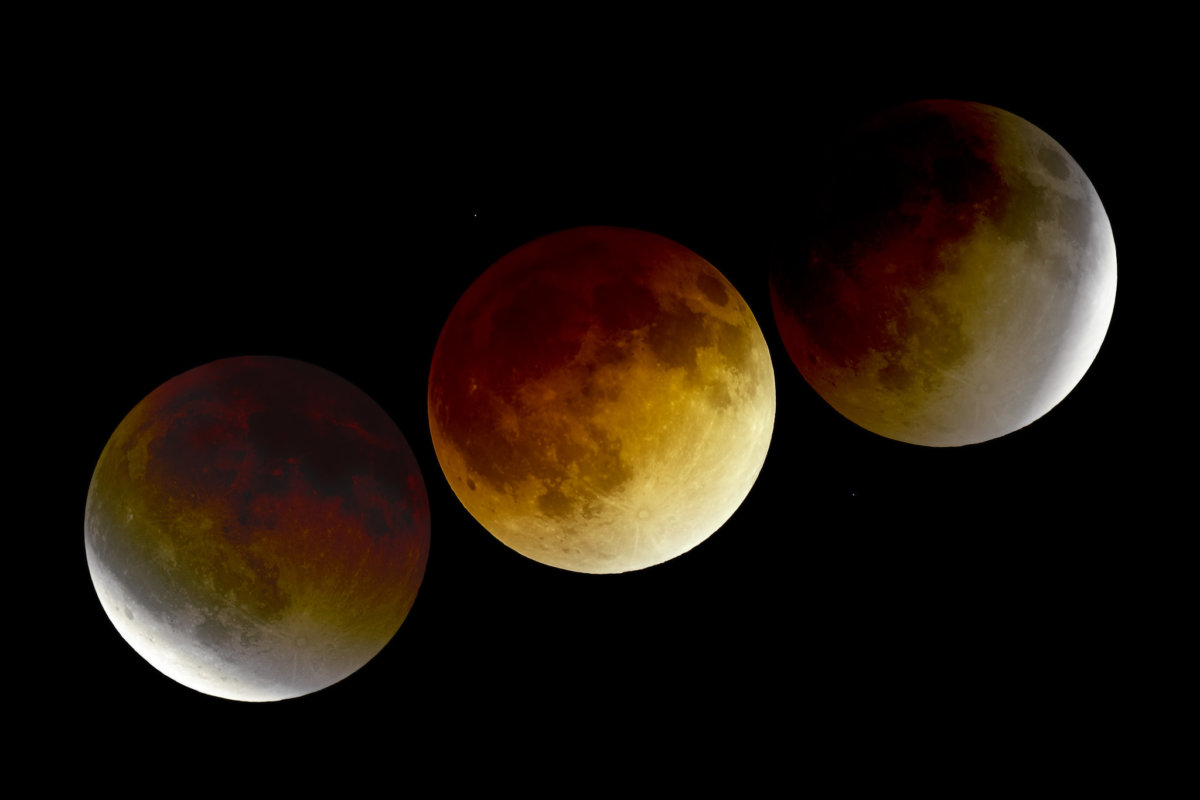
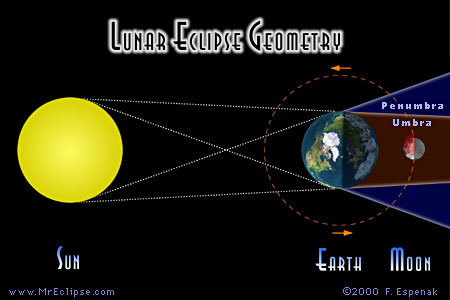
A lunar eclipse occurs when Earth’s shadow blocks the sun’s light causing the moon to appear dark. During a lunar eclipse, the full moon, sun, and the earth align with the earth in the middle.
During a partial lunar eclipse (like the one occurring on November 18 – 19, when the alignment is not perfect), only a part of the Earth’s shadow will fall on the moon’s surface. Although the moon doesn’t cross the center of the Earth’s shadow or umbra, the alignment is still enough to turn most of the lunar face into vibrant copper colour with a small uneclipsed sliver.
In addition to its glow, this eclipse also has the distinction of being the longest partial lunar eclipse since the year 1440.
It will also be the longest lunar eclipse until 2669 with a total penumbral duration of 6 hours, 1 minute and 29 seconds. The umbral duration is calculated to last 3 hours, 28 minutes and 23 seconds.
Why does the moon glow like a lantern:
During the eclipse, the moon passes through the southern portion of the Earth’s umbra casting its shadow over all but a small portion of the Moon. Due to the refraction of some of the sunlight in the Earth’s atmosphere, the portion under the Earth’s shadow will have a reddish hue. Together with the uneclipsed yellow sliver, the moon appears strikingly beautiful to the naked eye.
This optical effect that happens during the eclipse is termed the Japanese Lantern Effect.
When is the lunar eclipse:
Date: November 18-19, 2021
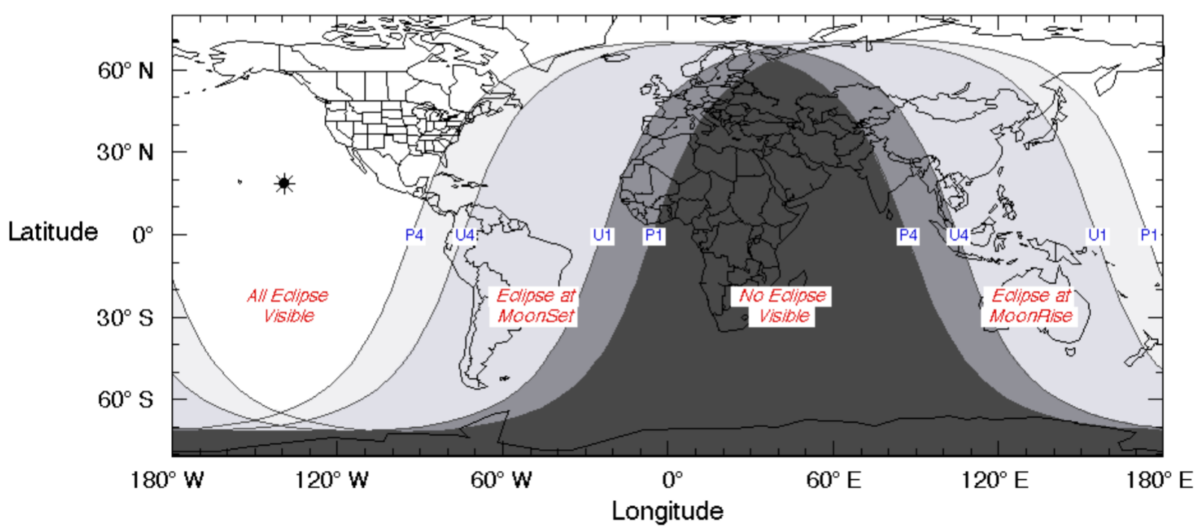
The lunar eclipse can be viewed from North and South America, Australia, and parts of Europe and Asia. According to calculations, the eclipse will last for 6 hours, 1 minute, 29 seconds.
Depending on your location, you can see the eclipse during the early hours of November 19th. The eclipse will peak at 4:02 a.m. EST on November 19, 2021.
Newfoundland Time (NST): Partial Eclipse Begins: 3:48 am; Maximum Eclipse: 5:32 am; Partial Eclipse Ends: 7:17 am
Atlantic Time (AST): Partial Eclipse Begins: 3:18 am.; Maximum Eclipse: 5:02 am; Partial Eclipse Ends: 6:47 am
Eastern Time (EST): Partial Eclipse Begins: 2:18 am.; Maximum Eclipse: 4:02 am; Partial Eclipse Ends: 5:47 am
Central Time (CST): Partial Eclipse Begins: 1:18 am; Maximum Eclipse: 3:02 am; Partial Eclipse Ends: 4:47 am
Mountain Time (MST): Partial Eclipse Begins: 12:18 am; Maximum Eclipse: 2:02 am; Partial Eclipse Ends: 3:47 am
Pacific Time: Partial Eclipse Begins: 11:18 pm; Maximum Eclipse: 1:02 am; Partial Eclipse Ends: 2:47 am
Observers looking at the Moon will be able to see a faint, but a distinct smudge on the left side of the moon’s disk when it enters the umbra. When the Moon leaves the umbra, a similar smudge will be observable for 20 minutes on the right side of the Moon’s disk.
How to watch the lunar eclipse:
November 19th lunar eclipse is visible from all of Canada.
NASA
Watching a lunar eclipse is a safe activity. Just look up at the moon with the naked eye. You can also use binoculars or a small telescope for a clearer view.
This eclipse time is noticeably longer, about 104 minutes from the time the dark umbral shadow first appears on the Moon’s face until the Moon is covered and another 105 minutes for the umbra to exit off of the Moon.
This is because the Moon will be at apogee (the farthest point from the Earth’s orbit) on November 20th, consequently taking a much longer time to traverse through the Earth’s shadow.
The next total lunar eclipse visible from Canada is on May 15–16, 2022.