Charlottetown
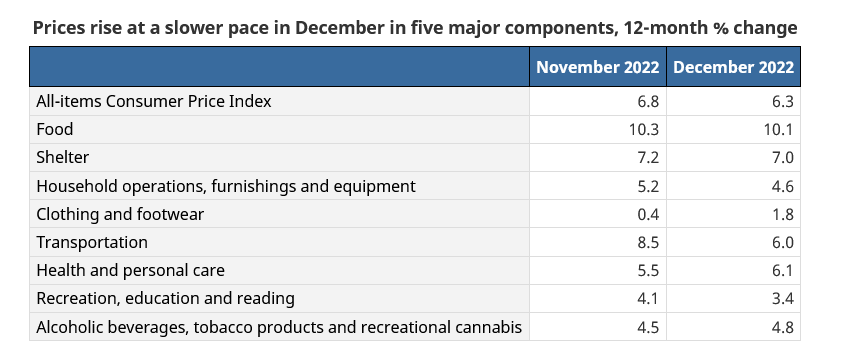
The annual rate of inflation has fallen to 6.3 per cent, a drop of 0.5% compared to November due to a reduction in gasoline prices, says Statistics Canada in the Consumer Price Index report for December 2022.
As per the report, prices rose 5.3% on a yearly basis last month excluding food and energy, a reduction of 0.1% compared to November 2022.
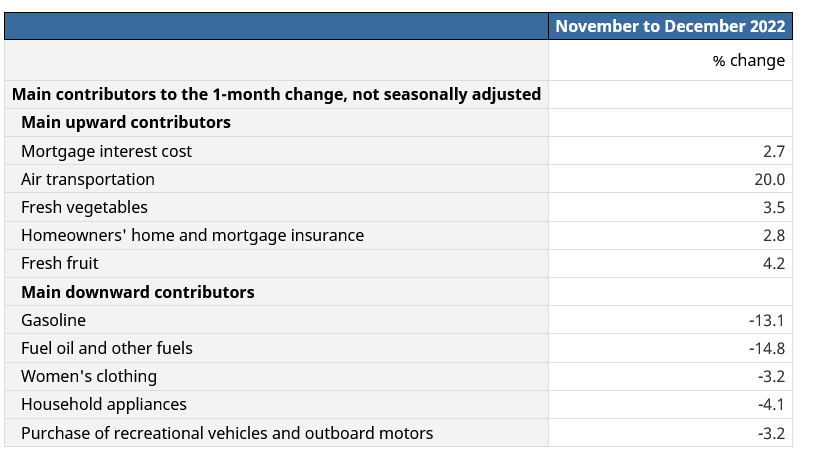
Statistics Canada says gasoline prices only increased by 3.0% in December on an annual basis after a 13.7% increase in November. This is the largest monthly decline since April 2020. Prices for fuel oil and other fuels also reduced compared to November.
The higher interest rates caused the mortgage interest cost index to increase by 18% in December following a 14.5% increase in November.
Food Prices:
Statistics Canada says prices for food purchased from stores reduced by 0.4% in December compared to November.
The cost of fresh vegetables rose 13.6% in December following an 11.2% increase in November. The price increase was felt for most vegetables including tomatoes (+21.9%) and other fresh vegetables (+11.7%) due to unfavourable weather in growing regions.
While prices are still 11% up compared to December 2021, prices of groceries increased at a slower pace compared to November 2022:
- Non-alcoholic beverages:: +16.6%
- Bakery products: +13.5%
- Coffee and tea: +13.2%
- Other food preparations: +11.5%
- Preserved fruit and fruit preparations: +7.2%
Inflation Across Provinces:
While inflation grew at a slower pace across Canada, prices decelerated the most in Atlantic provinces due to the lower cost of furnace fuel oil and gasoline.
| November 2022 | December 2022 | |
|---|---|---|
| Canada | 6.8 | 6.3 |
| Newfoundland and Labrador | 6.7 | 5.7 |
| Prince Edward Island | 9.7 | 7.7 |
| Nova Scotia | 8.6 | 7.6 |
| New Brunswick | 7.8 | 6.3 |
| Quebec | 6.8 | 6.3 |
| Ontario | 6.4 | 6.0 |
| Manitoba | 8.5 | 8.0 |
| Saskatchewan | 6.9 | 6.7 |
| Alberta | 6.6 | 6.0 |
| British Columbia | 7.2 | 6.6 |
Compared to November 2022, an increase in mortgage interest, air transportation, fresh vegetables and fruits, and homeowners’ home and mortgage insurance were the main contributors to the total increase in inflation.
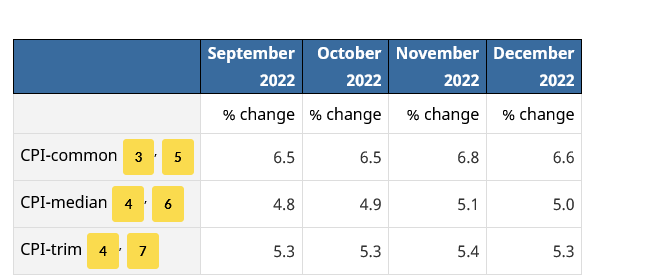
Bank of Canada uses CPI-trim, CPI-median, and CPI-common to influence its policy interest rate. The central bank says these “core” inflation measures better reflect the underlying inflation trend as it eliminates volatile components from inflation data.
Credit: Statistics Canada
Those inflation indices have remained relatively stable across the last four months. Bank of Canada will announce whether it will increase the interest rates on January 25th.