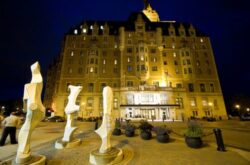
Regina

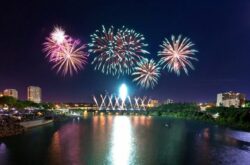
Credit: Overwater Photography
From impressive hills to flatlands, sand dunes to purple sand beach, Saskatchewan has many natural attractions that will call to the nature lover in you. Check out the places on the list to find out what makes Saskatchewan so unique.
1. Athabasca Sand Dunes
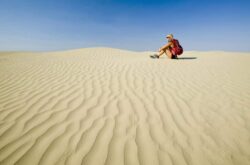
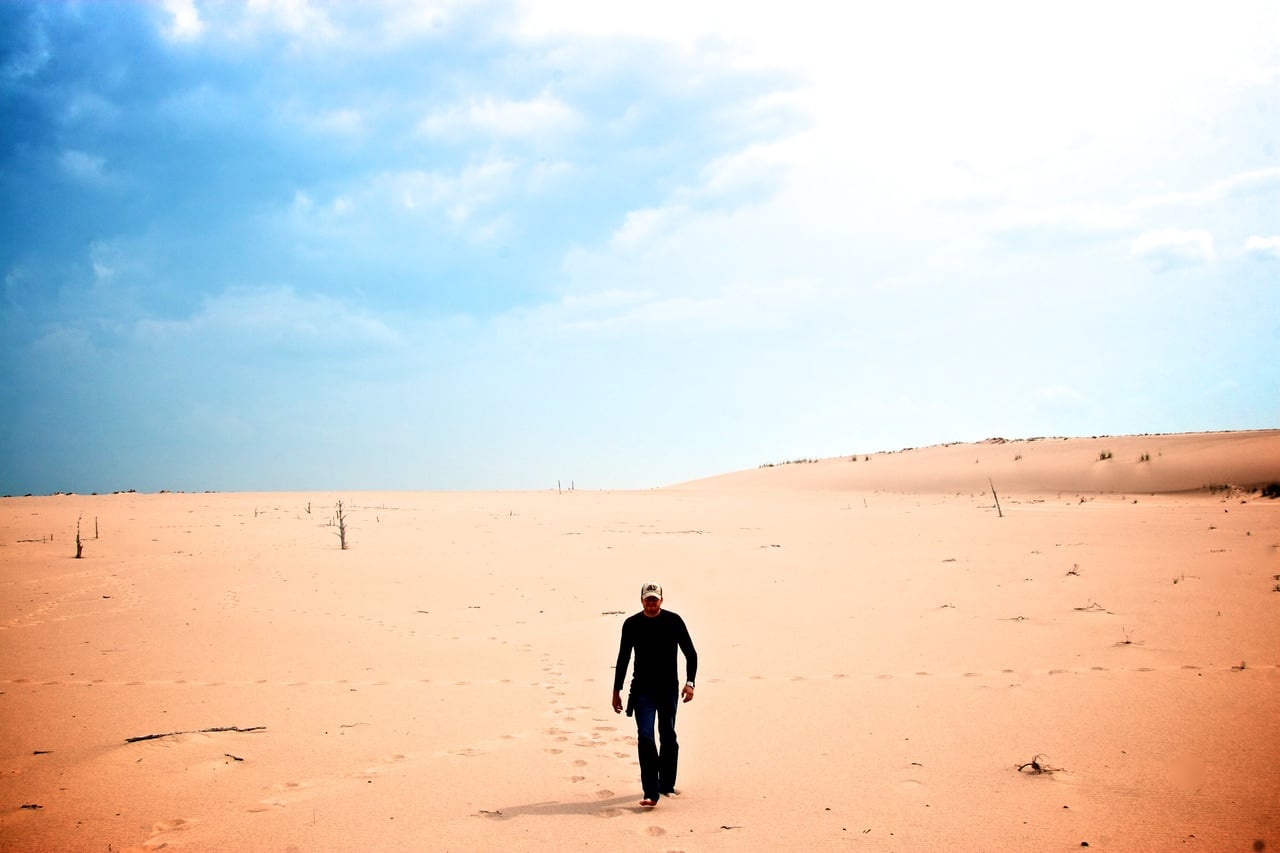
When it comes to Saskatchewan’s natural wonders, it doesn’t get much better than the Athabasca Sand Dunes. These dunes, which have the distinction of being the largest active sand surface in the entire country, cover almost 100 km of the southern shore of Lake Athabasca. Getting to the dunes might require a bit of planning, as they are located in the very far northern part of the province.
Credit: Tourism Saskatchewan
While the sand dunes are spectacular, the Athabasca Sand Dunes Provincial Park is accessible by plane only. If you aren’t an experienced wilderness enthusiast, it might be best to take a guided trip through an outfitter to see this amazing, sandy wonder.
2. Great Sand Hills
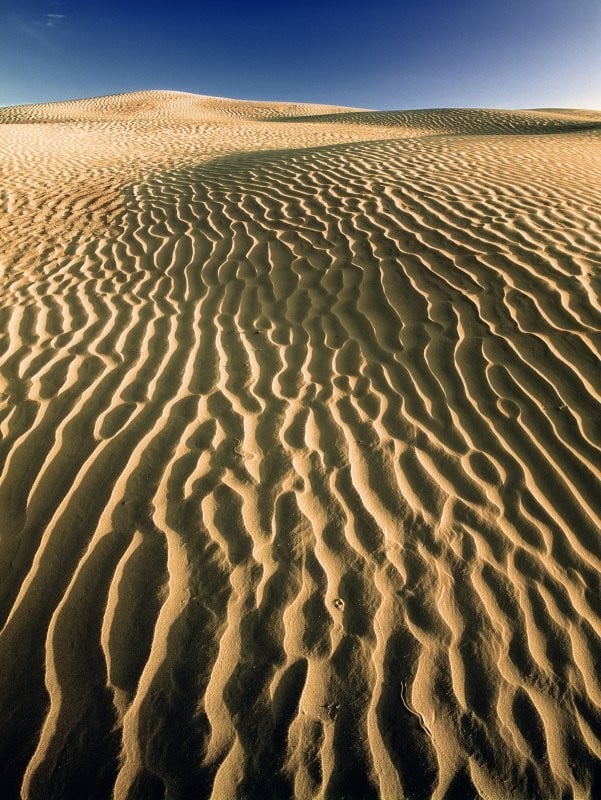
If you’ve always wanted to see sand hills in Saskatchewan, but you can’t make it up north to see the Athabasca Sand Dunes, consider the Great Sand Hills instead! This desert-like wonderland is located 27 km south of Sceptre, 159 km northwest of Swift Current, and just over three hours from both Regina and Saskatoon. Covering 1900 square kilometres, the Great Sand Hills truly is great! These actives dunes are always shifting and changing. Come experience the majesty of the area for yourself! Details
Credit: Tourism Saskatchewan
3. Big Muddy Badlands Outlaw Caves
Credit: Tourism Saskatchewan
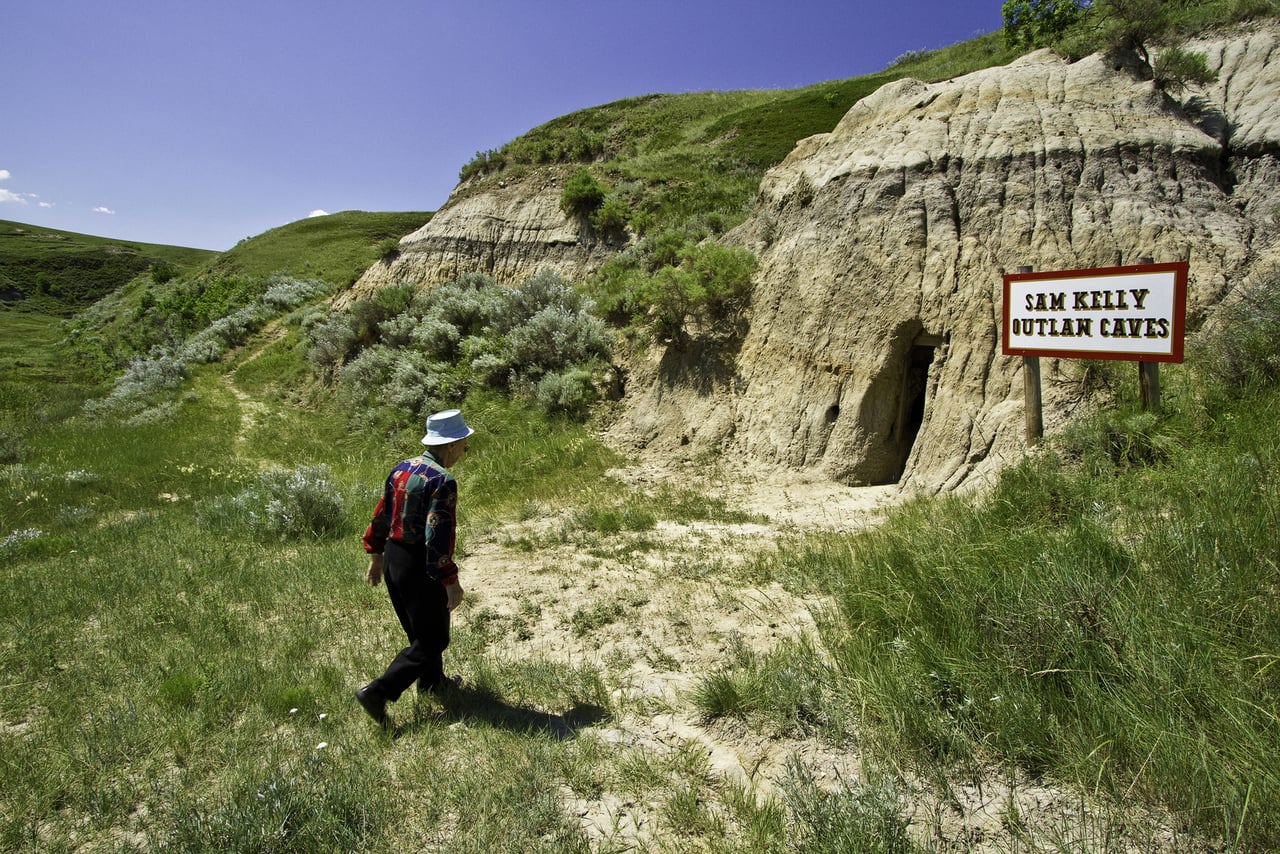
The whole Big Muddy Badlands area is quite fascinating. Perhaps one of the most exciting aspects of the Big Muddy are the Outlaw Caves. The caves once provided shelter for outlaws and were used in the late 1800’s to the early 1900’s as part of the Outlaw Trail. The system actually extended all the way from Canada right down to the US and even to Mexico. The Caves can be seen as part of a tour during the summer months. The Caves are literally less than five minutes from Coronach, and are two hours and fifteen minutes southwest of Regina. Details
4. Castle Butte
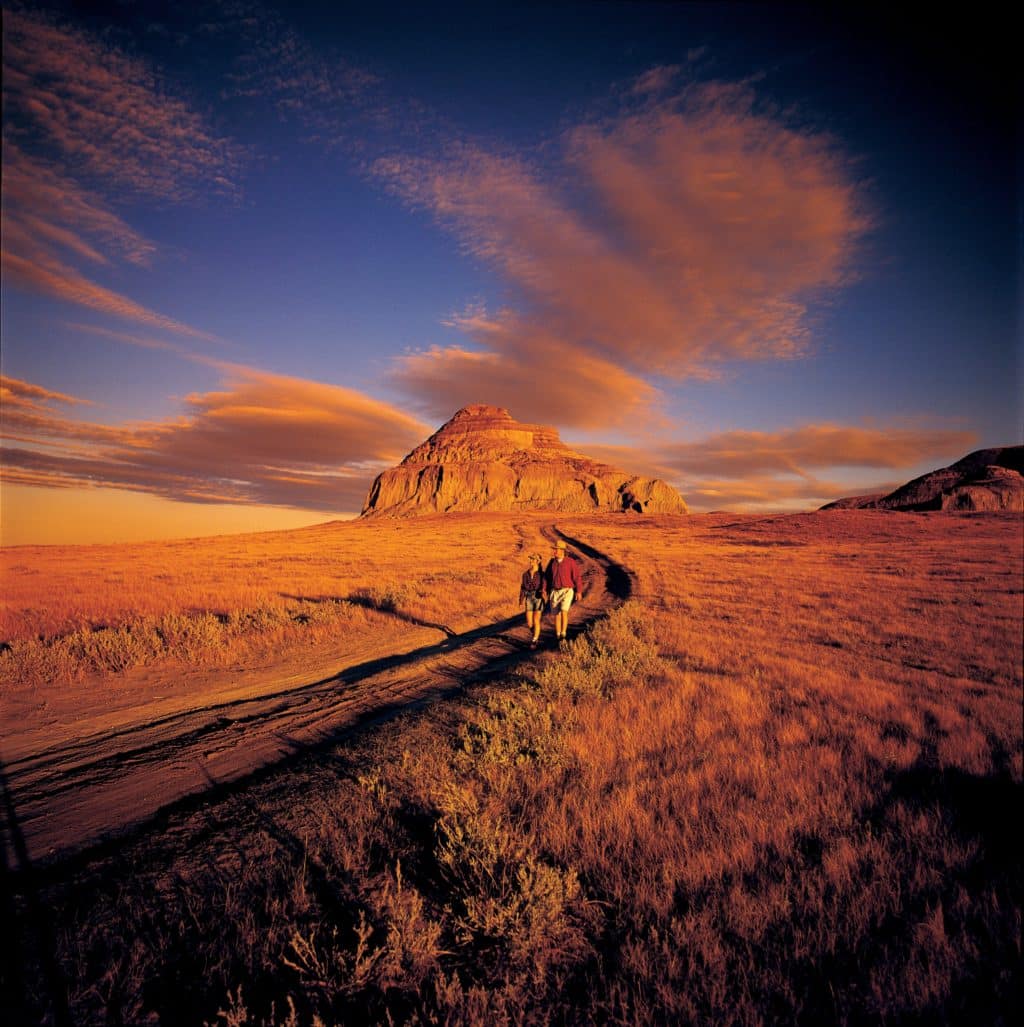
Tourism Saskatchewan/Douglas E. Walker
Castle Butte is one of those unique structures that you have to see. It rises up 60 meters from the ground and has a 500 meter circumference. In the past, Castle Butte was an important landmark for Indigenous people, and amazed early settlers. Castle Butte was created by the last ice age, and stands like a monument to another era. During the summer months, you can take a guided tour of Castle Butte, or you can venture there on your own. Castle Butte is located 22 km south of Bengough and 38 km northeast of Coronach.
5. St. Victor Petroglyphs
While they might not exactly be a natural wonder, the more than 300 carvings at the St. Victor Petroglyphs Provincial Historic Park are one of the province’s greatest mysteries. The who, when, and why of the carvings has yet to be answered. No one knows the real answer, but these carvings are quite wondrous to see. Some are layered on top of each other and it’s also unique that they are carved on horizontal surfaces.
The carvings date all the way back to between 500-1700 AD. The carvings are located just 2 km south of St. Victor, just over two hours southwest of Regina.
The area is fenced off to prevent damage, hence you can not really make out the carvings, but there are interpretive panels and reproductions that will help you learn more about the place.
6. The Twisted Trees
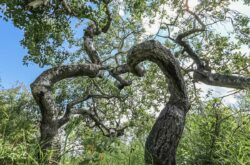
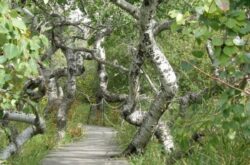
The Crooked Bush is certainly a strange natural wonder, and yes, it’s right here in Saskatchewan. These Quaking Aspen trees are so unique because they grow sideways, twisting out horizontally instead of reaching vertically towards the sky. There is a boardwalk that runs through the area, so you can take yourself on a self-guided tour of exciting discovery. The area draws many tourists every single year. These incredible trees are located about twenty-five minutes northwest of Hafford, 65 km northeast of North Battleford. Details
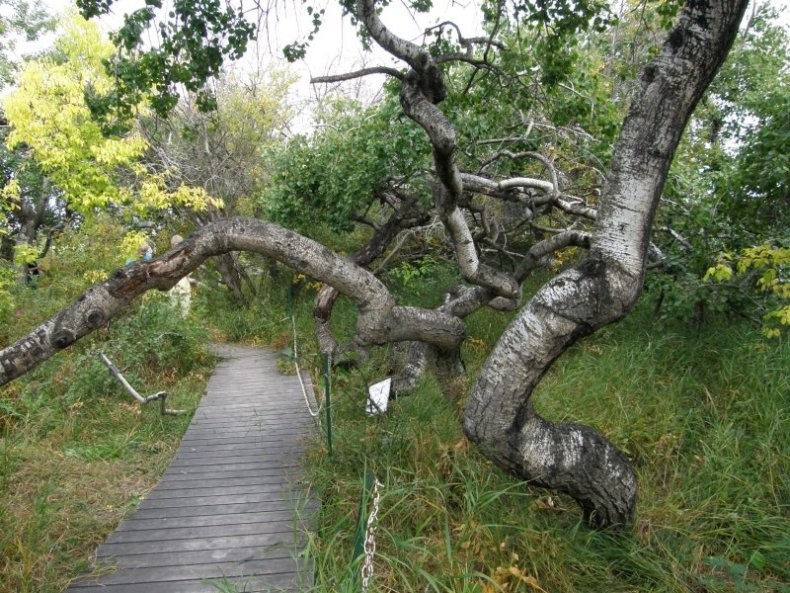
Credit: Tourism Saskatchewan
7. St. Louis Ghost Light
The St. Louis Ghost Light is perhaps one of the strangest and most eerie phenomena in the entire country. While it might not be the kind of natural wonder you first think of, it definitely is wild and wonderful. The light is also naturally occurring… at least everyone thinks so. St. Louis is located about 130 km northeast of Saskatoon. An abandoned railway track runs through the countryside, and this is where things get strange. A mysterious light can sometimes be seen floating above the track, as the light of a ghost train. The cause of this phantom ghost light has been debated hotly for a very long time. Why not go and see if you can solve the mystery? Details
8. Deep Bay
Located on the southern part of Reindeer Lake, Deep Bay was created by a meteor strike during the Cetaceous period. It is quite round and has a diameter of 9.5 km. At 220 meters deep, Deep Bay has the distinction of being the deepest body of water in the entire province. Legend has it that a monster lurks in waters of the bay. Reindeer Lake is quite a hike into the northern part of the province. It is 671 km northeast of Saskatoon and 537 km northeast of Prince Albert. There are several outfitters on the lake if you’re looking to stay, fish, or discover the incredible Deep Bay. Details
9. The Purple Sand Beach
The beach on Candle Lake in the Candle Lake Provincial Park is quite a sight to behold. In some areas and stretches, the sand is actually purple. Yes. Purple. There actually are a few other purple sand beaches throughout the province, and they are quite something to see, including Deschambault Lake, Hunter Bay, Good Spirit Lake and many more places. It is really quite a sight to behold as the sand shimmers in the light. The sand is reportedly purple because of the granite particles that push up to the surface from below, though there are other theories about what causes the unique colour as well. The park is close to the village of Candle Lake and is just under an hour northeast of Prince Albert.
10. Grasslands National Park
Grasslands National Park is truly a wonder of the prairies. The park is ecologically diverse and features many different species of animals including prairie dogs in their towns, burrowing owls, and wild plains bison. The park is a vast and beautiful place that is perfect for exploring. Grasslands National Park is located an hour and a half south of Swift Current, three and a half hours southwest of Regina, and just under four and a half hours from Saskatoon.
The Valley of 1000 Devils
You might never have heard this name before, and if you haven’t ventured into the southern part of the province, you should definitely put it on your bucket list. Saskatchewan really is a fascinating land and nothing lets you explore this diverse terrain like a trip down into the Killdeer Badlands in the East Block of Grasslands National Park.
If you hike through the area, you’ll see the last remaining areas of pure prairie, red clay, hoodoos, buttes, and more. This part of the badlands is called The Valley of 1000 Devils. The area looks more like a prehistoric land than it resembles what many people might think of when they think of the flat prairies of Saskatchewan.
You might be lucky enough to find a fossil, and the area is known to be rich in dinosaur bones. Details
Rock Creek Badlands
Located in Grasslands National Park in the East Block, the Rock Creek Badlands area has the unique distinction of being an area that is incredibly rich in dinosaur fossils. The unique landscape is millions of years old and features the kind of landscape that you’d except to see anywhere but in Saskatchewan.
Buttes, hoodoos, eroded hillsides, and other fascinating formations dot the landscape. The area has great hiking trails and has many great lookout spots for stunning views of these badlands.
The area is also home to many different kinds of wildlife, so keep on the watch. Grasslands National Park is located three and a half hours southwest of Regina, and an hour and a half south of Swift Current.
11. Jones’ Peak
Located 14 km west of Eastend, nearly four hours southwest of Regina, and an hour and a half southwest of Swift Current is the incredible Jones’ Peak. If you’re looking to get a stunning panoramic view of the entire river valley below, the peak is the place to be. Some might argue that the spectacular countryside almost seems like it belongs to another time or another place.
The countryside hardly resembles people’s idea of a flat Saskatchewan. The area is known for the amazing wildlife viewing and is great for bird watching as well. It’s recommended to use the trails to the peak if possible, as the area and hills are known to be steep and can give way quite easily.
12. The Gem Lakes
Located in the Narrow Hills Provincial Park, an hour and forty minutes northeast of Prince Albert, the Gem Lakes are indeed a natural wonder. The beauty of these lakes, which are clear and sparkle in the sun like real gemstones, is just about guaranteed to take your breath away. There are seven of these incredible lakes to explore. The hiking trail that wind through the park are spectacular, and there is one trail in particular that meanders past the lakes with some stunning views. The park can be accessed from Highway 106 (north of Smeaton) or Highway 120 (north of Meath Park).
13. The Boreal Trail
Northern Saskatchewan is known for its pristine, rugged wilderness. The Boreal Trail extends for almost 120 km through Meadow Lake Provincial Park. The Boreal Trail is made up of smaller trails, so you don’t have to worry about doing the whole thing. You can drop in and exit out at various points.
The trail is known as a premier backpacking destination and there are various camping sites along the route, so if you do want to tackle the entire trail, you can make it a real adventure.
The Boreal Trail skirts along some of the most beautiful scenery you could ever encounter. Towering trees, rocky cliffs, wetlands, and meadows teem with wildlife. The trail also skirts around some gorgeous lakes.
Meadow Lake Provincial Park is three and a half hours northeast of Prince Albert, two and a half hours north of North Battleford, and an hour northeast of Meadow Lake.
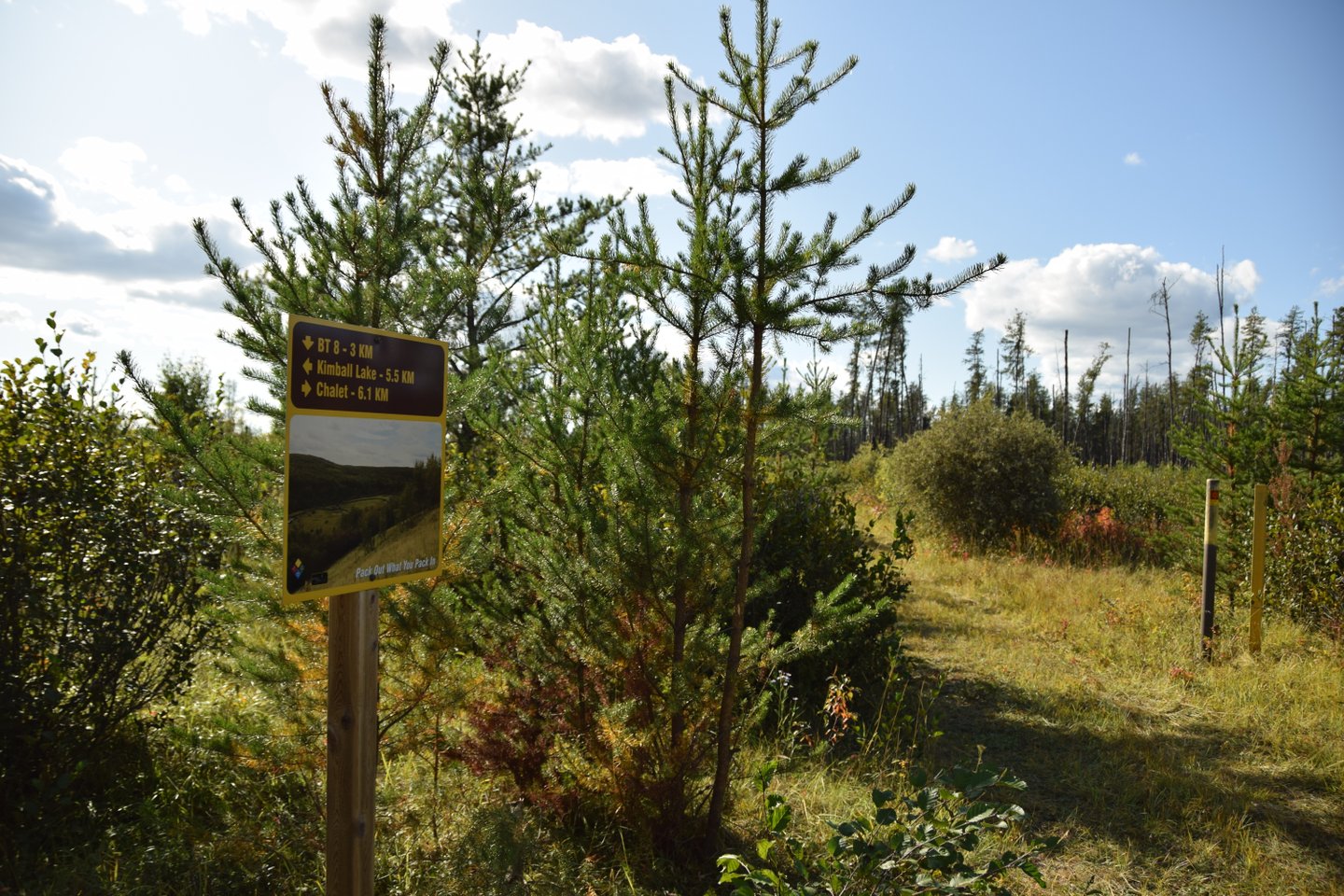
Photo Credit: SaskParks
14. Hunt Falls
Hunt Falls has been touted as the province’s most magnificent waterfall, and it’s not hard to see why. This incredible waterfall is located on the Grease River in the far northwestern part of the province. The unspoiled wilderness is never so apparent as it is when you venture truly far into the more remote, northern parts of the province.
The beauty of Saskatchewan’s north could rival even many of the other provinces’ natural wonders. The Grease River is up to 160 feet wide in some spots, and the Hunt Falls is an impressive 60 feet wide. The area has an almost otherworldly feel and is teeming with all sorts of wildlife and species of birds.
Like many northern areas, it is very remote and generally can only be reached by float plane. It’s best to try and leave from Stony Rapids. If you do make the journey, it’s truly wondrous, and chances are, you won’t see a single other person the entire time you’re there. Stony Rapids is nearly fifteen hours north of Saskatoon, thirteen and a half hours north of Prince Albert, and is 77 km west of Fond Du Lac.
15. La Roche Percee Provincial Historic Site
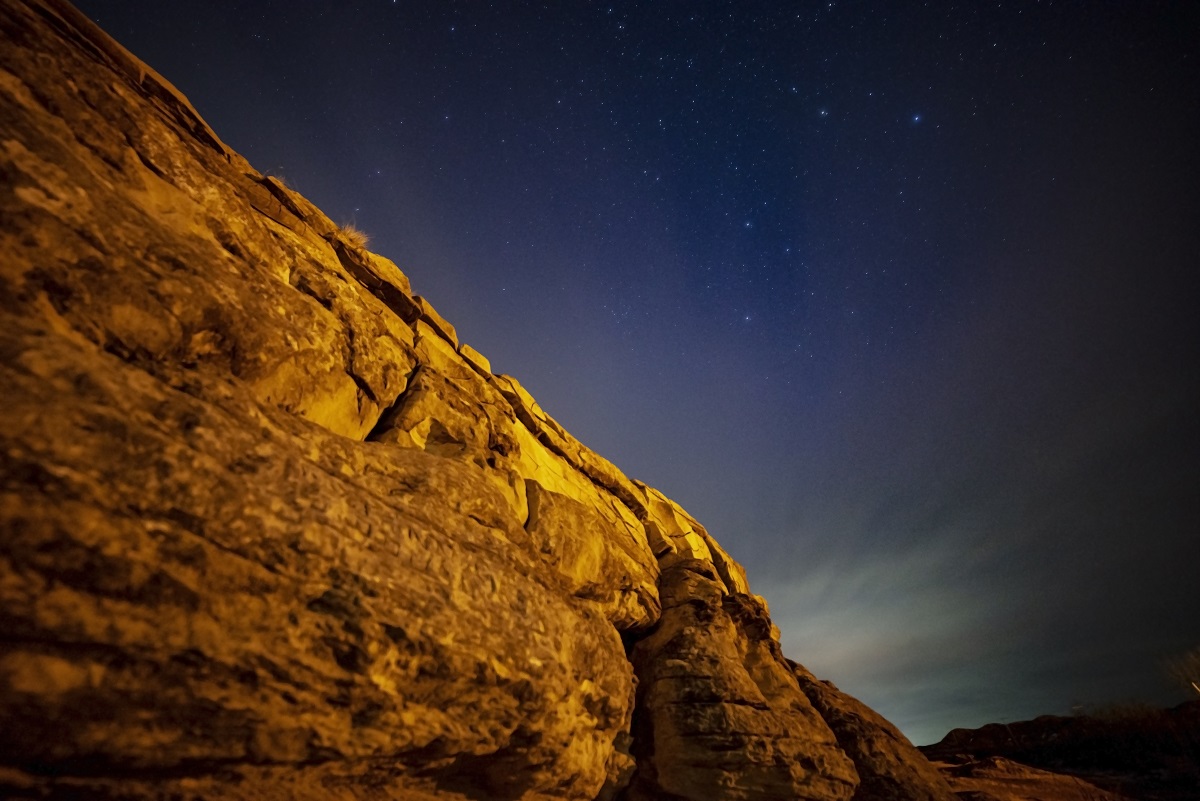
Credit: Tourism Saskatchewan
La Roche Percee Provincial Historic Site is one of those really unique natural places that aren’t like anything else in the province. You’ll get to see the amazing rock formations that were formed through wind and water erosion. These formations once featured carvings by Indigenous peoples, and early settlers and explorers alike.
The rock formations are located just half a kilometre east of Roche Percee, two and a half hours southeast of Regina, and an hour southeast of Weyburn.
16. The Limestone Crevices
The incredible Limestone Crevices are located near Creighton. The area is a testament to Saskatchewan’s unique, ancient history. Millions of years ago, the province looked vastly different than it does now.
The Limestone Crevices area was once covered by an ancient sea. Throughout the years, the reefs and mud from the sea were compacted into limestone. The best part is that now you can explore through the kilometres of crevices and caverns for yourself. Hunt for fossils while you marvel at this natural wonder.
As always, caution should be used when exploring. Creighton is located just over seven hours northeast of Regina and is four hours northeast of Prince Albert.
17. Cypress Hills
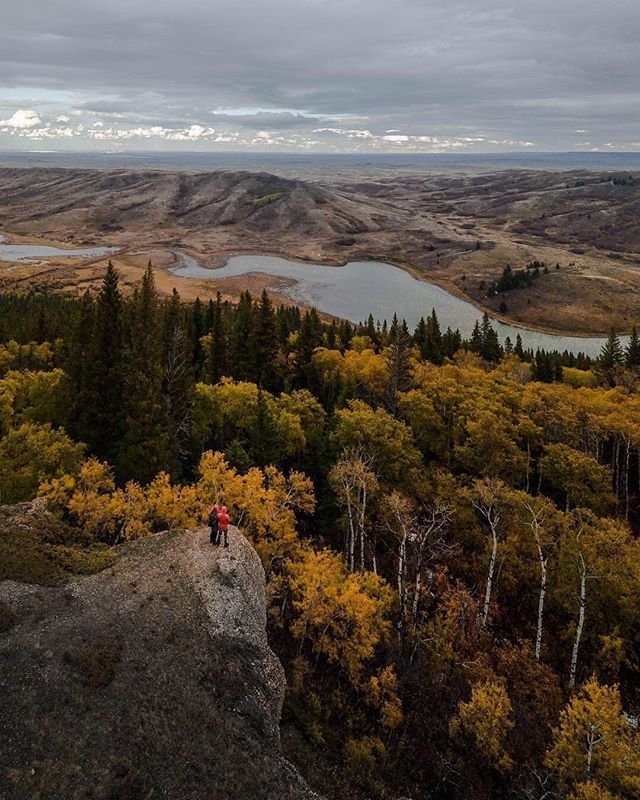
The Cypress Hills Interprovincial Park spans a large section of the southwest corner of the province. The area is incredible, with varied and diverse terrain. From rolling hills to wetland, lakes, to prairie, the area is home to different wildlife and over to hundred different species of birds. The area, which is millions of years old, has a rich, interesting, and unique history. There is a ton of things to do and see here, and over time it has become a favourite destination spot for many.
Cypress Hills is located just under an hour and a half southwest of Maple Creek, two and a half hours southwest of Swift Current, and just under five hours southwest of Regina.
Credit: @nkausha/Tourism Saskatchewan
18. Nistowiak Falls
Located on the Churchill River in the Lac La Ronge Provincial Park, the Nistowiak Falls are some of the most impressive falls in the entire province. The falls are also one of the highest falls in Saskatchewan. Because they are so far north, journeying to see them is an adventure all on its own.
The falls can be reached by float plane, or by boat as well.
Experienced canoers can also reach the falls, as they are located 20 km east of Stanley Mission.
There are outfitters and companies who can help make your dreams of seeing the falls a reality.
Stanley Mission is three and a half hours northeast of Prince Albert. Details
19. Saskatchewan’s Largest Tree
Credit: Tourism Saskatchewan
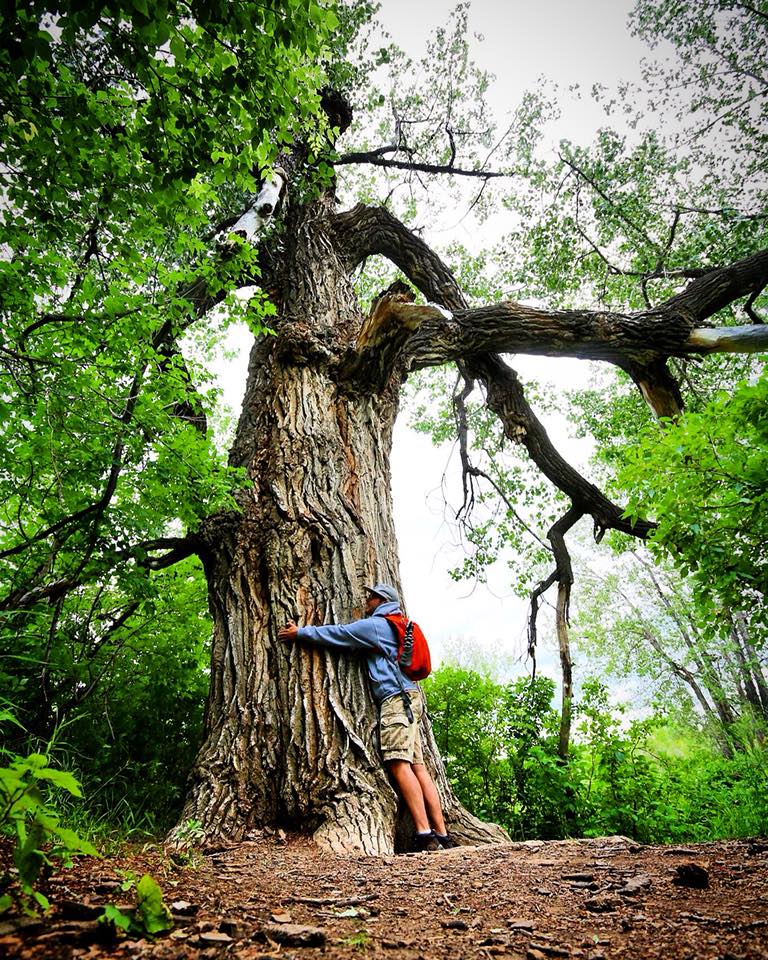
The largest tree in the entire province is located near Blaine Lake. This impressive tree towers over the area at an incredible 68 feet tall. The cottonwood/balsam poplar hybrid tree has a trunk that is a whopping 16 feet around.
If you think that’s impressive, it’s pretty incredible to learn that the tree is also over a century and a half old.
To find the tree, drive approximately 20 km south of Blaine Lake on Highway 12 and keep a lookout for signage. Blaine Lake is just under an hour northwest of Saskatoon.
20. The Dark Sky Preserve
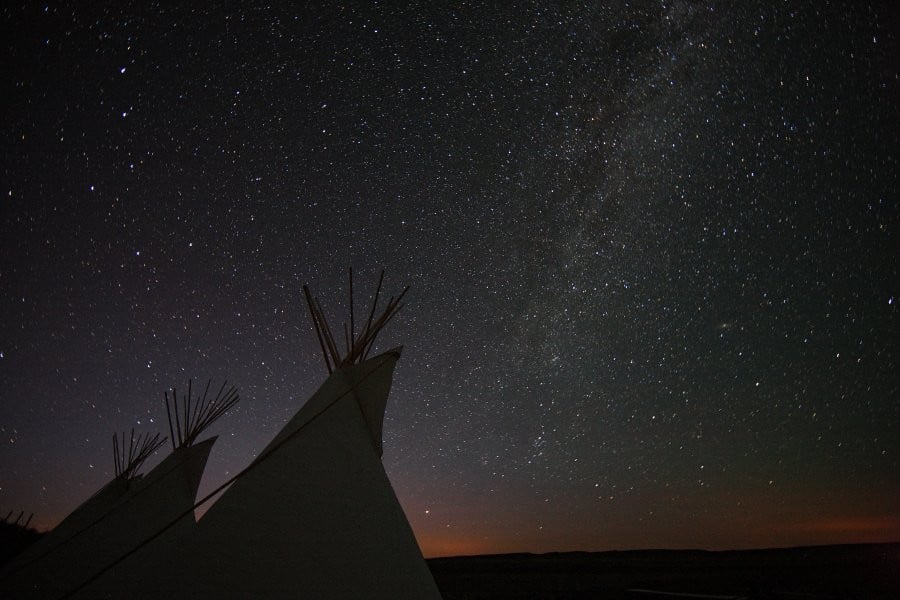
Located in Grasslands National Park, the amazing Dark Sky Preserve lets people come to celebrate an amazing natural wonder- the night sky. If you think you’ve seen the stars before, you haven’t seen them like this. The Dark Sky Preserve is free of light pollution, which lets you experience the night sky in a brand new way. This Dark Sky Preserve, at 527 sqkm, is one of the largest in the entire world. There are car accessible locations for stargazing, and some of the campgrounds in the park are also excellent stargazing spots.
The West Block of the park is approximately an hour and a half south of Swift Current, while the park’s East Block is located about two hours south of Moose Jaw.
Credit: Tourism Saskatchewan
21. The Churchill River
The mighty Churchill River is known around the world as a premier canoe destination, but it’s so much more than that. The River is an incredibly natural wonder that runs through Saskatchewan’s north.
It is marked by rugged shield, interconnected lakes, incredible waterfalls, rapids, and by boreal forest. The rugged wilderness makes the Churchill River a great body of water to explore.
The Churchill River starts near Buffalo Narrows and continues on for 1600 km to Hudson Bay.
Buffalo Narrows is five hours northwest of Saskatoon, and four hours northwest of Prince Albert. Of course, the river can be accessed from many other points and locations as well.
22. Little Manitou Lake
This incredible salt lake is located near Watrous. The lake is quite an anomaly in a province where freshwater lakes dominate. The lake is actually saltier than the ocean and swimmers are extremely buoyant. The lake receives a lot of tourist attention every single year. The Resort Spa and the town of Watrous are also hotspot tourist destinations.
Little Manitou Lake is located just an hour southeast of Saskatoon.
23. The Chief Whitecap Waterway
The Chief Whitecap Waterway lets you explore the incredible South Saskatchewan River. It runs between Saskatoon and Gardiner Dam. The Waterway stretches for over 100 km and is part of the Great Trail. There are several exit and entrance spots where canoers, kayakers, and even those adventuring out on paddleboards can put in or exit, so you can do part of the route, or challenge yourself to do the entire 130 km length. It’s said to be quite an adventure and is undoubtedly breathtaking.
24. Nipekamew Sand Cliffs
Nipekamew Sand Cliffs are unique geological formations dating back to the last ice age. They are located an hour southeast of La Ronge along the banks of Nipekamew River. The sand cliffs are made of layers of compacted sand, pebble and clay deposits. Erosion of the cliffs have made them extremely fragile, so tourists are asked to respect this fragile piece of environment and not to damage them. The trail head to the sand cliffs is from a narrow dirt road on the west side of the Nipakamew River along highway 165. Walk 1.5 km from the parking lot to reach the sand cliffs.
25. Massold Clay Canyons
Located an hour southwest of Regina and beside the Claybank Brick Plant National Historic site is the Massold Clay Canyons.
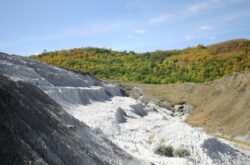
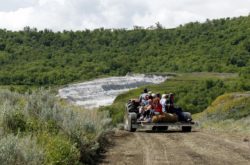
The Massold Clay Canyons are renowned for the whitemud formation, formed during the Cretaceous period. Two different types of clay can be seen in the formation: white and grey, each with different properties. The Claybank clay is ‘high-refractory’, referring to its excellent heat and pressure bearing properties making them excellent choices for bricks and tiles.
Near the Massold Clay Canyons is the Claybank Brick Plant National Historic Site, where bricks were manufactured since 1914. This brick plant is one of the best preserved examples of early 20th century industrial activity in Canada.