Winnipeg
A new report is putting a spotlight on a troubling shift in Canada’s labour market, and it’s young people who are feeling it most.

Credit: Headway /Unsplash
According to the Fraser Institute, youth unemployment has climbed sharply in just a few years, even without a recession. That’s what makes the trend stand out.
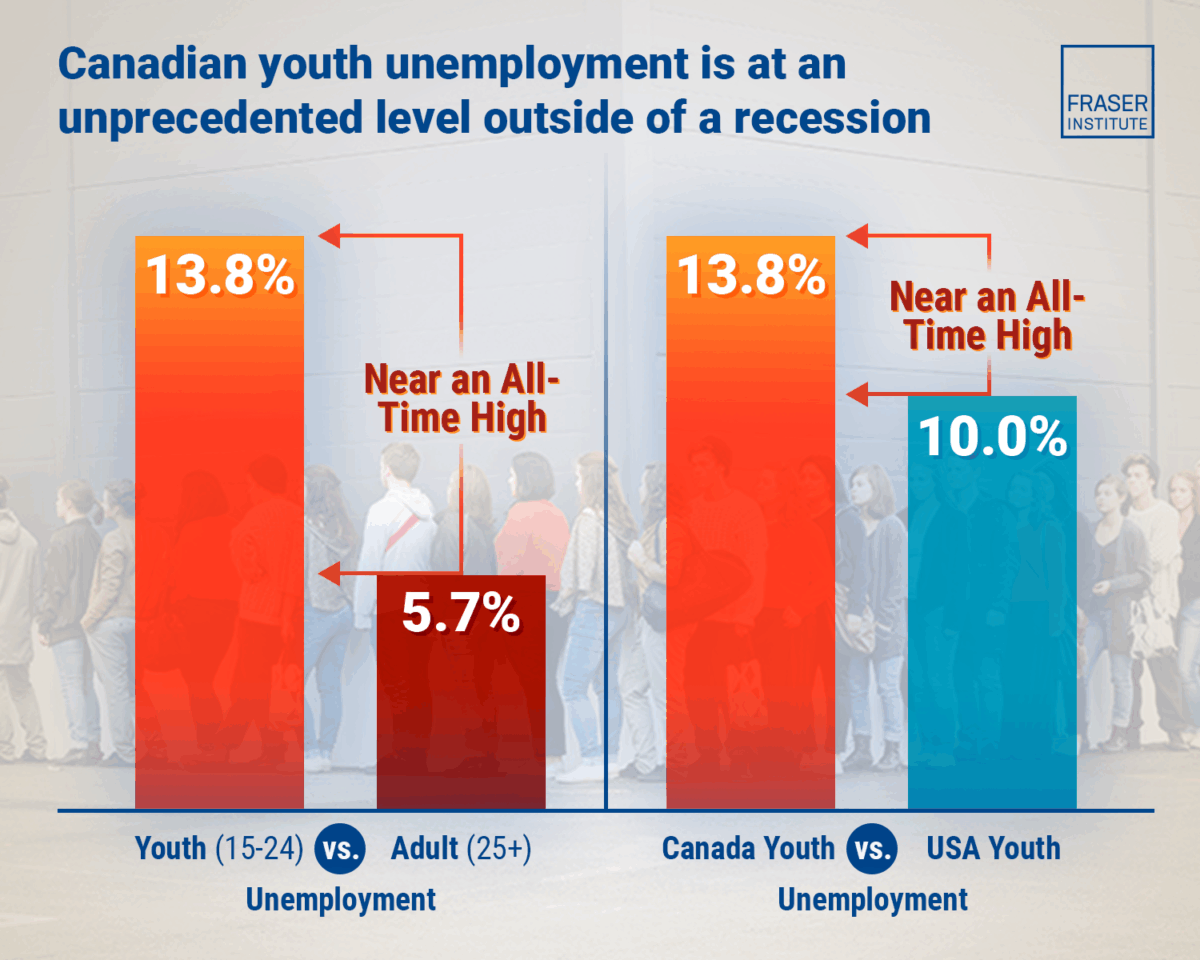
The study, authored by Philip Cross, tracks unemployment among Canadians aged 15 to 24 rising from 10 per cent in 2022 to 13.8 per cent in 2025. That marks the largest three-year increase on record outside of an economic downturn.
Put simply, more young people are struggling to find work, and they’re staying unemployed longer than at any point since data collection began in 1976.
The gap between youth and adult unemployment is also widening. In 2025, adult unemployment sits at 5.7 per cent, creating an 8.1 percentage point difference, one of the highest gaps ever recorded. For younger teens aged 15 to 19, the situation is even more pronounced, with unemployment at 19.5 per cent.
According to Statistics Canada, the unemployment rate among people aged 15 to 24 was 14.1% in February 2026.
Credit: Fraser Institute
The report also draws a comparison with the United States. Canada’s youth unemployment rate has been higher since 2015, and in 2025, it stands 3.8 points above the U.S. rate of 10 per cent.
What’s driving this? The report argues that Canada’s surge in youth unemployment is largely driven by domestic policy choices rather than external forces. It highlights two key “homegrown” factors: a rapid increase in immigrant labour, which expanded the supply of low-skilled workers, and rising minimum wages across provinces, which raised hiring costs and decreased the demand for it by increasing costs.
Together, these shifts made it harder for young people to compete for work, especially in sectors like retail and food services. The study dismisses other explanations such as artificial intelligence or pandemic-related learning loss, noting they do not align with the timing or scale of the increase.
The impact is especially visible in sectors like retail and food services, where about 70 per cent of youth jobs are concentrated.