 Kelowna
A new study from the Fraser Institute reports that Canada spends more on health care than most other high-income countries with universal systems, but has fewer medical resources and longer wait times.

Credit: Pixabay/Pexels
The report, Comparing Performance of Universal Health-Care Countries, 2025, shows that in 2023 Canada ranked third out of 31 high-income countries for health-care spending as a share of GDP after adjusting for population age. However, Canada placed 27th of 30 for the number of doctors and 25th of 30 for hospital beds.
The findings reveal similar shortfalls in diagnostic technology. In 2022, Canada was 27th of 31 for MRI machine availability and 28th of 31 for CT scanners. While the country performed slightly above average for nursing staff and gamma cameras, it fell below the OECD average across most other medical resources.
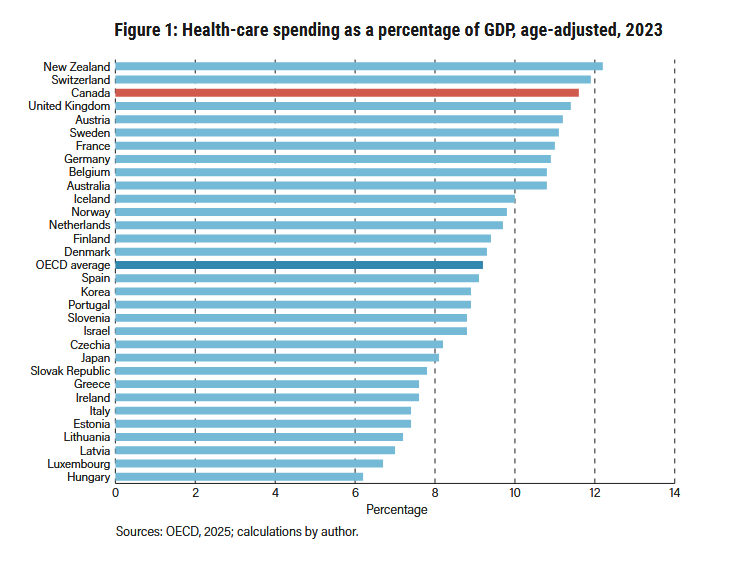
Credit: Comparing Performance of Universal Health Care Countries, 2025/Fraser Institute
According to the study, across 13 indicators of resource availability and service access, Canada performed worse than the average among countries with universal health care. Despite being one of the top spenders, the report highlights what it calls a “clear imbalance” between cost and outcomes.
Wait times remain a critical issue. Based on 2023 data from the Commonwealth Fund’s International Health Policy Survey, only 22 per cent of Canadians were able to secure same- or next-day appointments when sick—the lowest rate among nine countries studied. Canada also recorded the highest percentage of patients (58 per cent) waiting two months or longer for non-emergency surgery. In comparison, 47 per cent of patients in the Netherlands obtained quick appointments, and only 20 per cent waited two months or more for surgery.
The study further noted that 65 per cent of Canadians waited over a month to see a specialist, ranking the country eighth worst among peers.
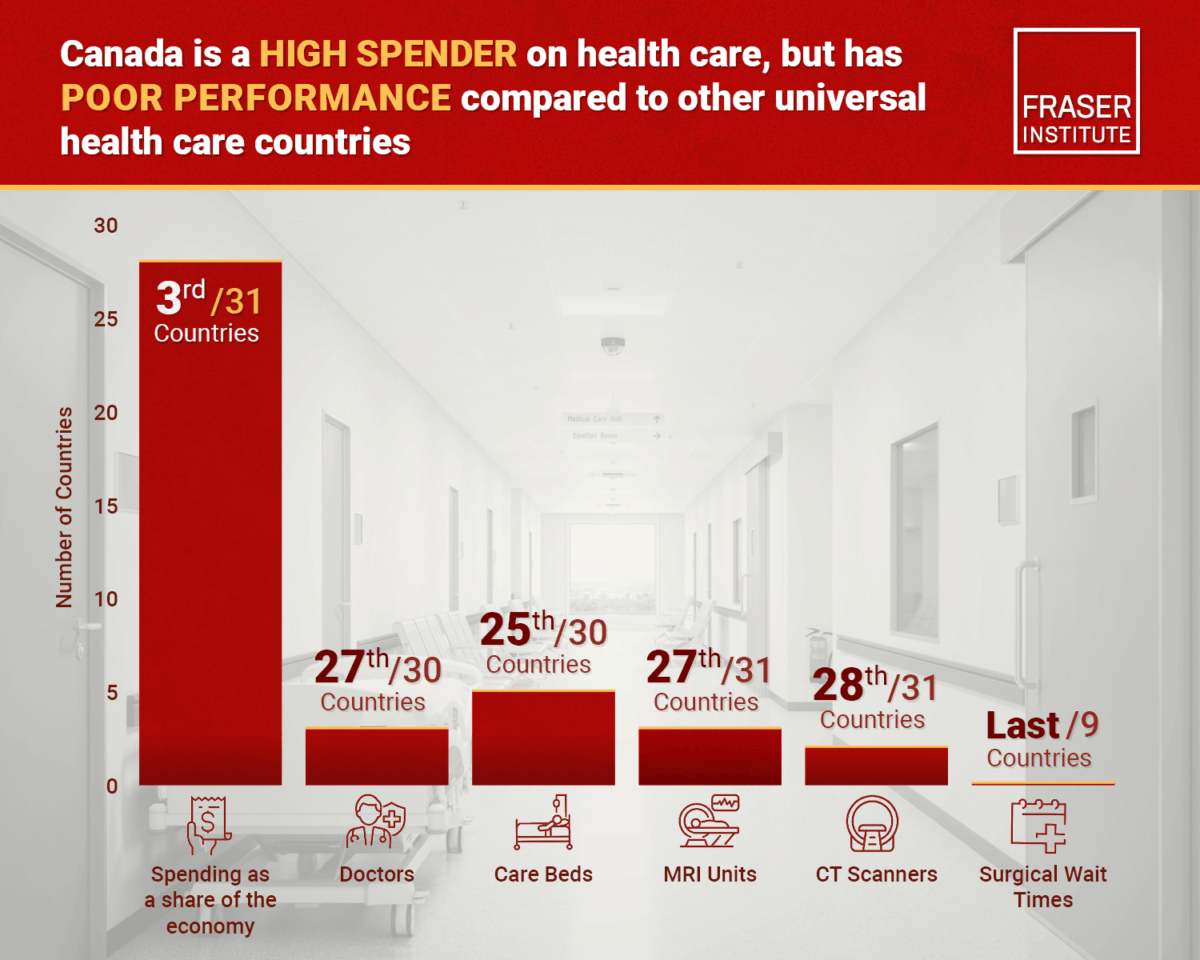
Credit: Comparing Performance of Universal Health Care Countries, 2025/Fraser Institute
“Canada’s health-care system costs more but delivers less access and fewer resources than other universal systems,” said Mackenzie Moir, senior policy analyst at the Fraser Institute and the report’s author. Nadeem Esmail, the institute’s director of health policy, said policymakers should examine higher-performing international models to address these shortcomings.
Comparing Performance of Universal Health Care Countries, 2025


