Toronto
Canada’s largest food rescue organization, Second Harvest says food insecurity will only worsen in the country in 2023.
Second Harvest today released the report, Canada Needs a New Year’s Resolution for Food Insecurity, which details the result of the survey of 1300 organizations on the extent of their charitable food programs and how they must adapt to changes in demand in the coming year.
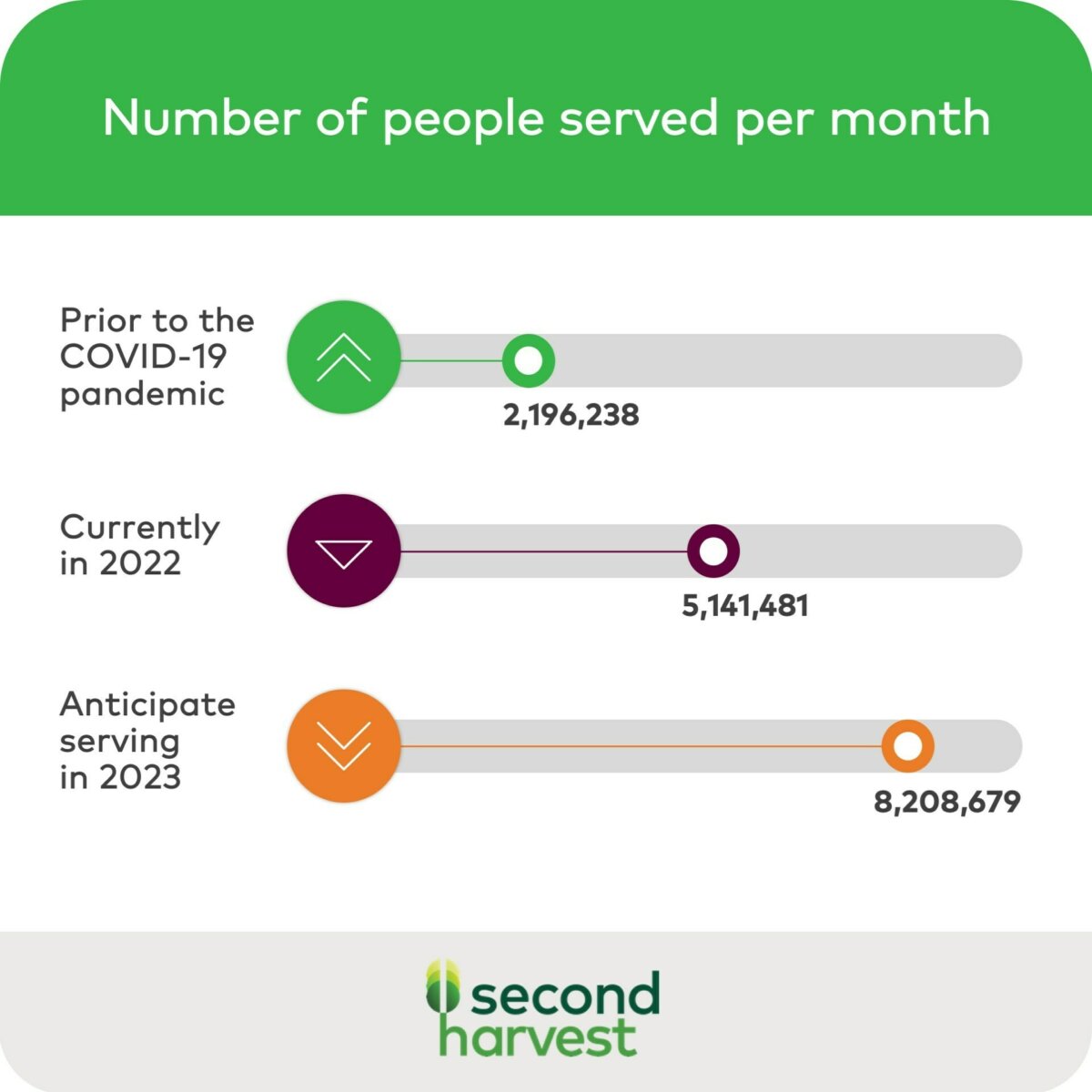
The report finds that non-profit food programs that hand out food to vulnerable Canadians forecast the number of people they serve to grow by 60% in 2023, on top of 134% growth in 2022.
CNW Group/Second Harvest
This works out to 8,208,679 people per month in 2023, up from 5,141,481 to in 2022. This is equivalent to 20% of the country’s population. As per Statistics Canada’s estimate, Canada’s population is now over 39 million up from 36,991,981 in the 2021 census.
Last November, Daily Bread Food Bank said there were over 2 million visits to Toronto food banks over the past year, and food bank clients have only $8 left for the month after rent and utilities.
Second Harvest says the end of Covid supports, food inflation and flat wages contribute to increased reliance on food charity. Not-for-profit organizations expect a total budget shortfall of $94 million to meet the demand in 2023, an average of $70K per organization.
Charities say they need to add 30% more food programs this year, increasing the average number of days per week they hand out free food from 3.7 to 4.2.
According to this year’s Canada’s Food Report, food prices are expected to rise up to 7% this year, an increase of up to $1,065.60 from the total annual cost in 2022 for a family of four. Ottawa Public Health says an individual needs $392 to eat healthy by including healthy food from the Nutritious Food Basket.
Lori Nikkel, CEO of Second Harvest said, “Without systemic change, food insecurity will only get worse in Canada.”