 Toronto
Unpalatable news awaits budget-conscious Canadians in the new year as 2023 Canada’s Food Price Report says food prices will continue to increase.
According to the report, significant price increases in vegetables, dairy, and meat will push up Canadians’ food bills by as much as 5% to 7%.
The report predicts that a family of four, including a man (age 31-50), woman (age 31-50), boy (age 14-18), and girl (age 9-13) will pay up to $16,288.41 per year on food, an increase of up to $1,065.60 from the total annual cost in 2022.

2023 Canada’s Food Price Report
The report by four Canadian universities – Dalhousie University, the University of Guelph, the University of Saskatchewan, and the University of British Columbia – also says food prices will increase in all provinces but Newfoundland and Labrador, and Quebec may see a below-average food price increase.
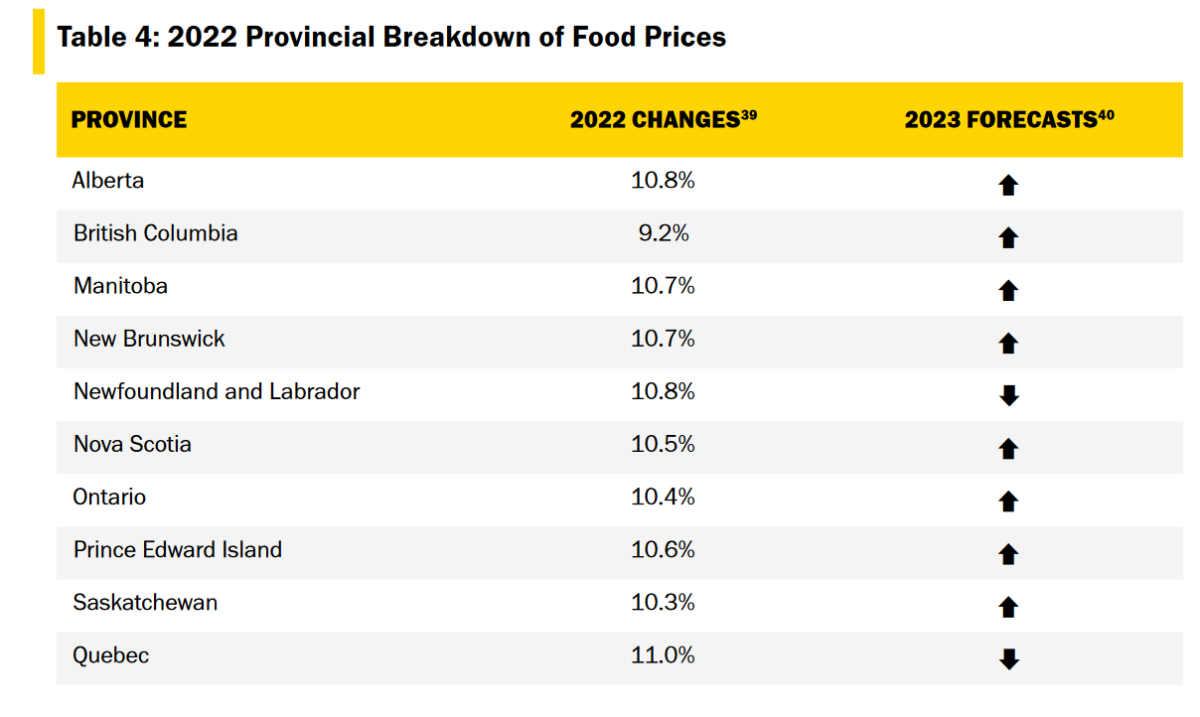
2023 Canada’s Food Price Report
According to the report, multiple factors contribute to high food prices including labour shortages, high oil and gas prices, continued adverse climate events, and geopolitical conflicts among others. Canadian dollar depreciation will continue to increase the cost of imported food.
The carbon tax may also contribute to the rising cost of food and the report reads, “By 2030, a typical 5,000-acre farm could see taxes of over $150,000 which could compromise the owner’s ability to make a profit. The added cost of a carbon tax will increase production and transportation costs associated with food and may be passed on to the consumer as producers try to remain profitable.”
The report also gives examples of various kinds of household compositions and their predicted annual food expenditure for 2023 to help Canadians plan their financials for the new year.
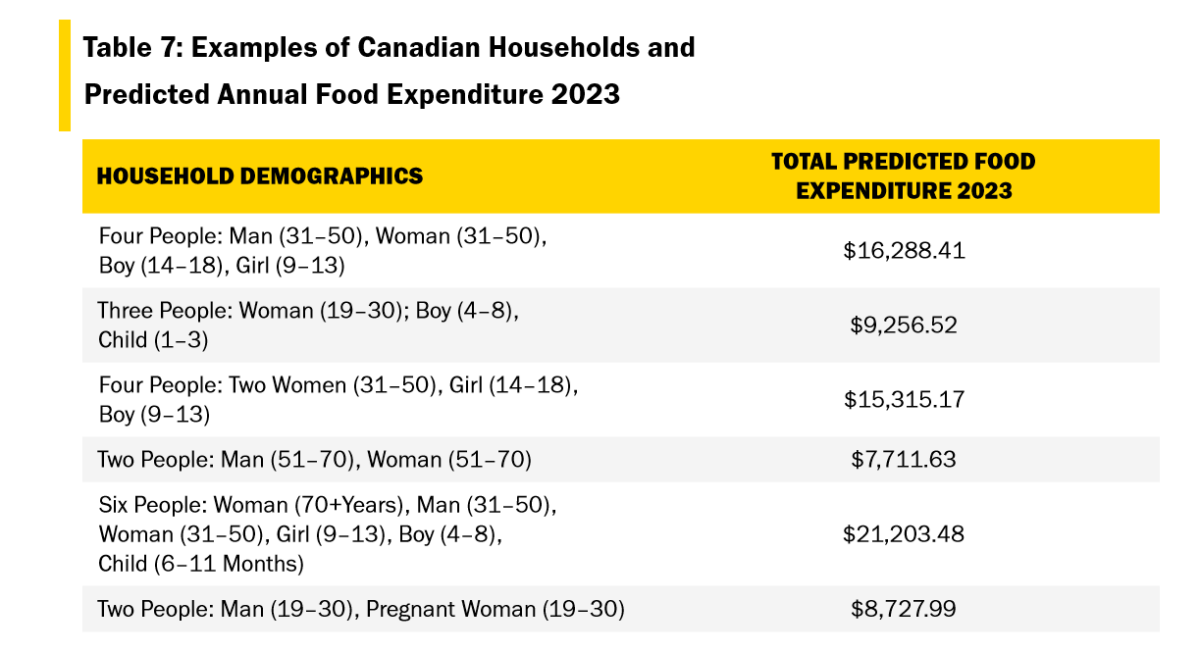
2023 Canada’s Food Price Report
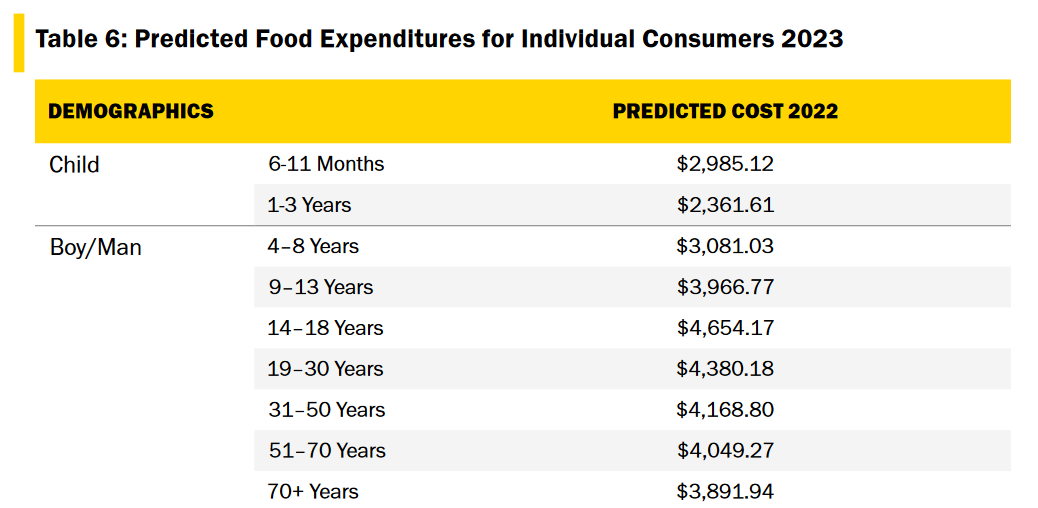
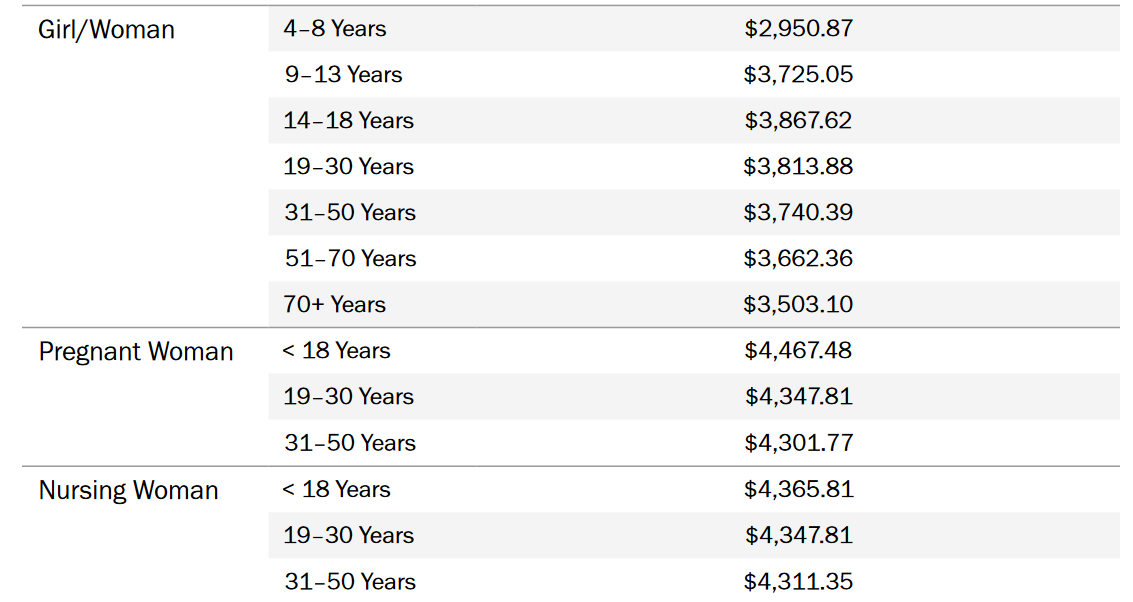
2023 Canada’s Food Price Report
University of Guelph campus lead, Dr. Simon Somogyi said in the news release, “We haven’t seen food prices increase this high in Canada for over 40 years and based on our findings, the increases we have predicted are still quite high but not as high as the increases for 2022.”
- This is How Much You Need a Month to Eat Healthy
- Only $8 Left After Utilities and Rent: Nearly 2 Million Visits to Toronto Food Banks Over Past 12 Months
“That may be cold comfort for Canadians, as food prices are already high, but if inflation can come down, it’s possible that we could see price increases for 2023 at or below 5%.”
The authors suggest that Canadians become smart shoppers by “consulting flyers for specials, creating and sticking to a budget and shopping list, looking for substitutes for expensive foods (such as frozen fruits and vegetables instead of fresh, and plant-based proteins like chickpeas or lentils instead of meat), or freezing meat when it comes on sale.”
Last year’s report predicted an increase of 5% to 7% increase, but observed costs reflect a 10.3% increase.
See more here: Canada’s Food Price Report 13th Edition 2023







It would be interesting to see what the total carbon tax cost is on a loaf of bread. You would have to account for each stage of production from putting the seed and fertilizer all the stages of production till the loaf is on the retail shelf.