 Kelowna
Canadians are set to see a growing share of government budgets directed toward debt interest payments, according to a new study from the Fraser Institute.
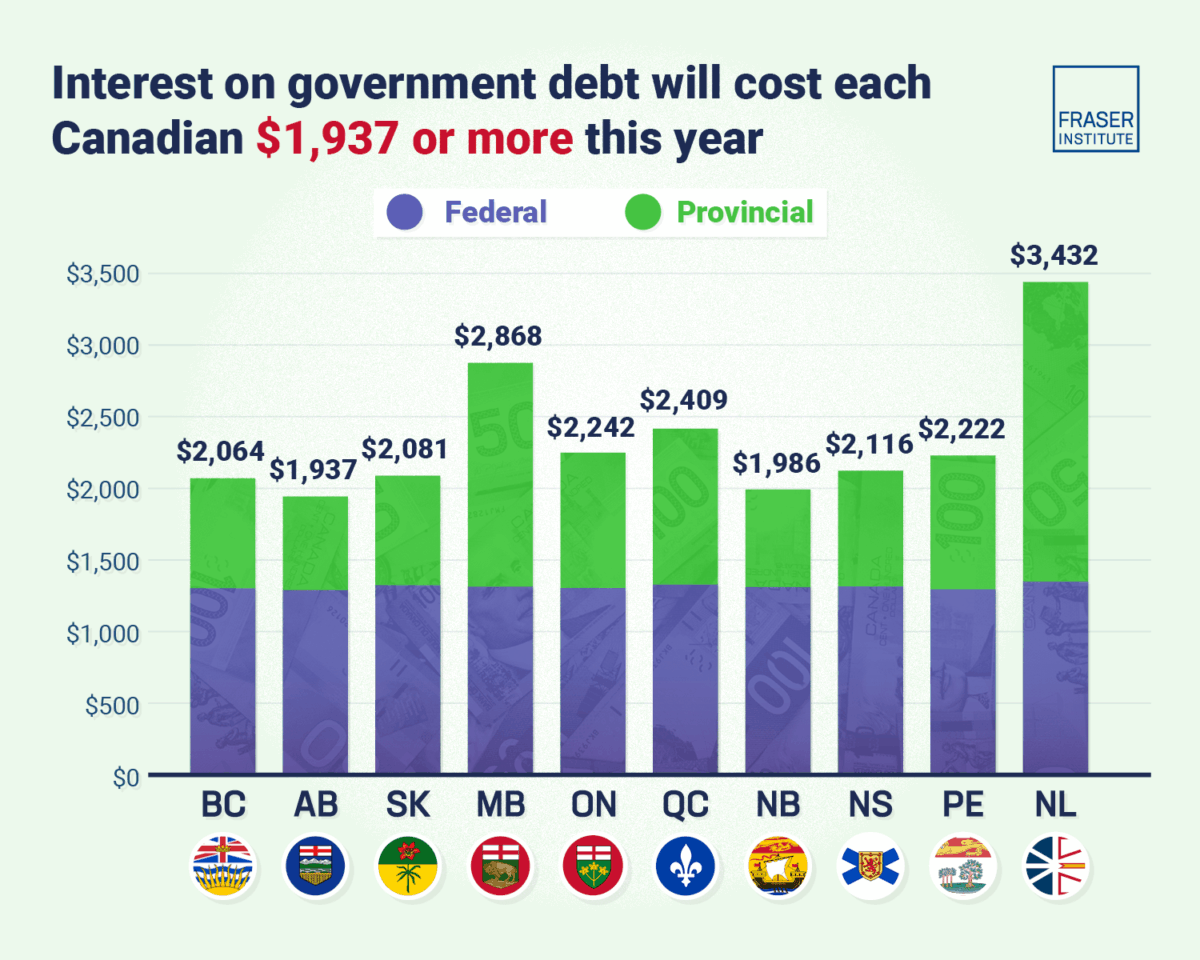
For 2024/25, combined federal and provincial interest payments are projected to reach $92.5 billion. The costs amount to between $1,937 and $3,432 per person, depending on the province.
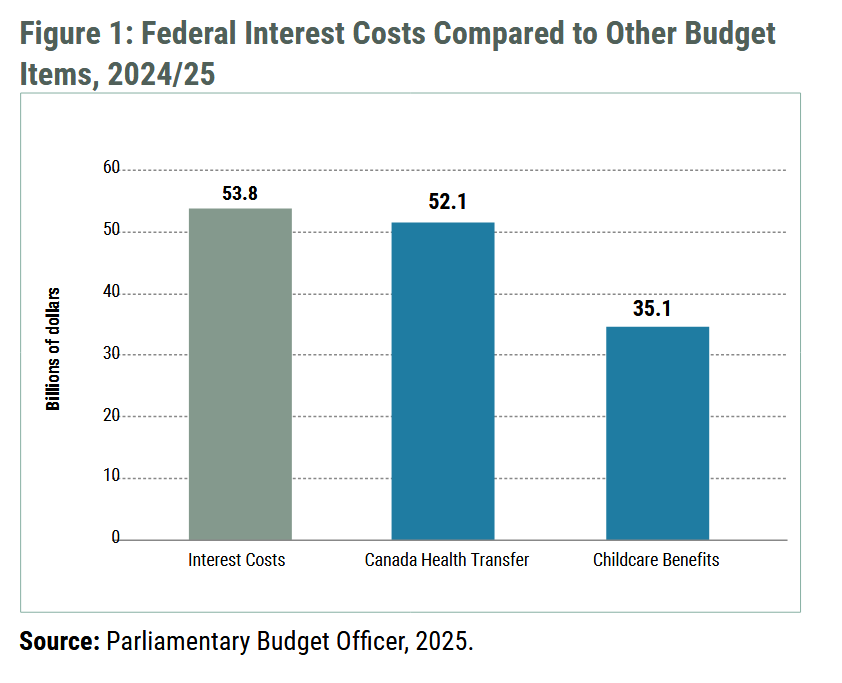
The federal government alone is expected to pay $53.8 billion in debt servicing charges. That figure exceeds projected spending on the Canada Child Benefit and the Canada-wide Early Learning and Child Care benefit ($35.1 billion), and even the Canada Health Transfer to provinces ($52.1 billion).
Credit: Fraser Institute
At the provincial level, Newfoundland and Labrador faces the heaviest per-person burden at $3,432, followed by Manitoba at $2,868. Alberta has the lowest at $1,937. In absolute terms, Ontario will spend $38.4 billion on combined federal and provincial interest costs, Quebec $23.0 billion, and Alberta $9.5 billion—amounts comparable to or exceeding projected K-12 education spending in those provinces. In British Columbia, $11.8 billion in interest costs surpasses what the province expects to allocate to social services this year.
Fraser Institute researchers note that rising debt and higher interest rates have intensified these costs. Canada’s combined federal-provincial net debt is projected to reach $2.3 trillion in 2024/25, a record high. All jurisdictions except Alberta and Nova Scotia are expected to run deficits this year.
Credit: Fraser Institute
“Interest must be paid on government debt, and the more money governments spend on interest payments the less is available for the programs and services that matter to Canadians,” said Jake Fuss, the institute’s director of fiscal studies.
The study warns that sustained borrowing will continue to divert resources away from areas such as health care, education, and tax relief.


