Calgary
The second-largest country in the world covering over 9.98 million square kilometres is home to a variety of wildlife from narwhals to polar bears.
With increasing urban sprawl and human activities in the wild, encounters with wild animals are becoming more and more frequent.
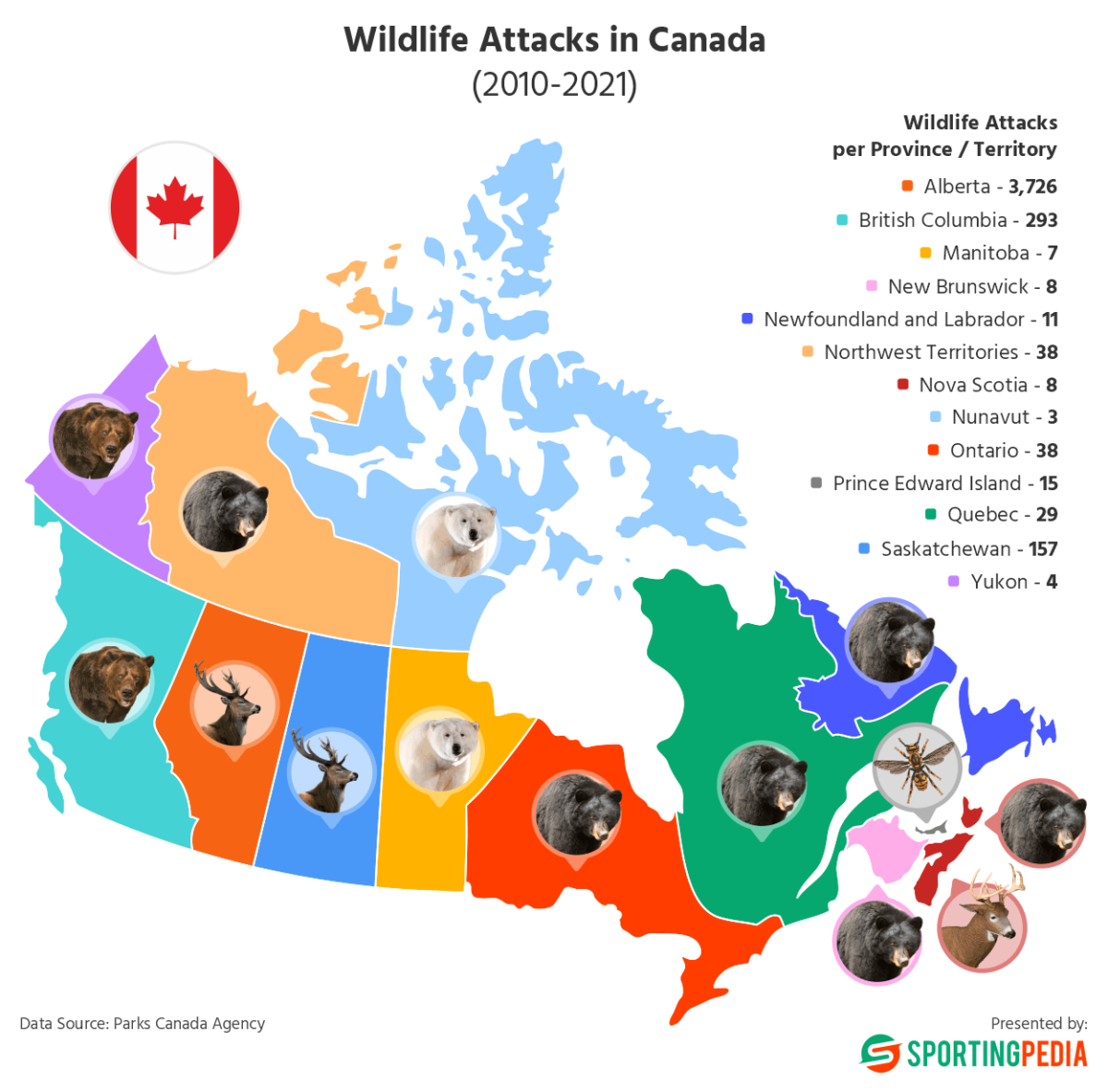
SportingPedia has published a report on the chances of being attacked by wildlife in each Canadian province after studying human-wildlife incidents in national parks over twelve years from 2010 through 2021. The organization analyzed information provided by Parks Canada on Open Government Portal. In addition, incidents covered by local or national media were reviewed. The report says fatal attacks and incidents causing severe injuries tend to receive the most media coverage, which can lead to an overrepresentation of these types of incidents.
SportingPedia
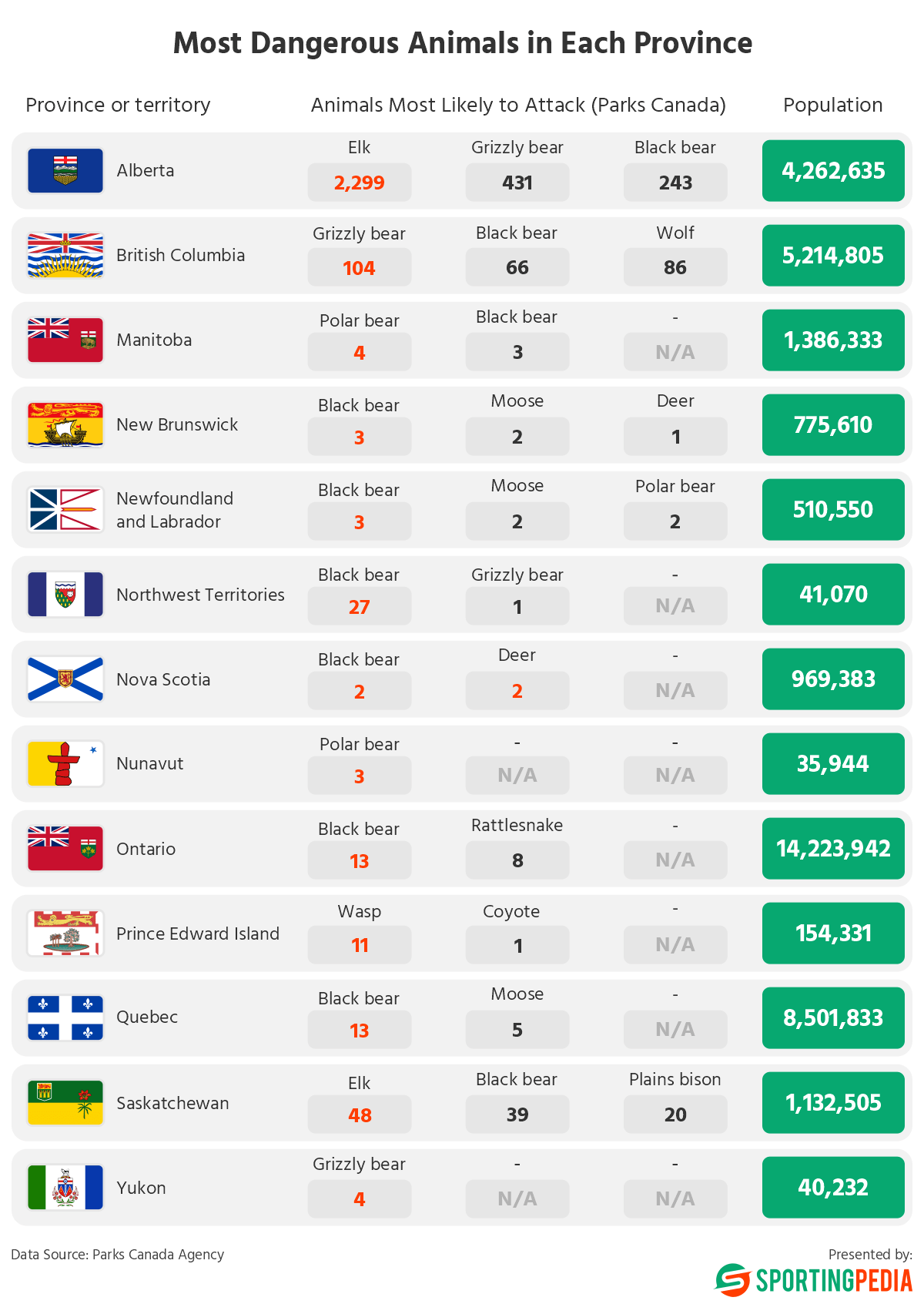
The report finds that you are most likely to be attacked by wild animals in Alberta than in any other province in the country. You are most likely to be mauled by elk (2,299) followed by grizzly bears (431) and black bears (243) in Alberta.
The animals responsible for attacks differ by province.
Grizzly bears top the list in British Columbia and Yukon. Elk is the main culprit in Saskatchewan.
Manitoba and Nunavut see the most polar bear attacks. Surprisingly, Islanders are most likely to be attacked by wasps.
Black bears make up the majority of wildlife encounters in all other provinces.
Ontario’s only venomous snake, the massasauga rattlesnake usually found in Eastern Georgian Bay, Bruce Peninsula, Wainfleet Bog and Ojibway Prairie Complex has bitten at least eight people according to the study.
Other animals that appear in the list include plains bison, deer, moose, and coyotes.
SportingPedia
According to SportingPedia, from 2010 through 2021, 1 in 1,081 people were attacked in Northwest Territories and 1 in 1,144 in Alberta.
- Northwest Territories: 1 in 1,081 people attacked
- Alberta: 1 in 1,144 people attacked
- Saskatchewan: 1 in 7,213 people attacked
- Yukon: 1 in 10,058 people attacked
- Prince Edward Island: 1 in 10,289 people attacked
- Nunavut: 1 in 11,981 people attacked
- British Columbia: 1 in 17,798 people attacked
- Newfoundland and Labrador: 1 in 46,414 people attacked
- New Brunswick: 1 in 96,951 people attacked
- Nova Scotia: 1 in 121,173 people attacked
- Manitoba: 1 in 198,048 people attacked
- Quebec: 1 in 293,167 people attacked
- Ontario: 1 in 374,318 people attacked
If you are venturing into the backcountry, it is essential to stay informed about the animal you may counter, know how to behave, follow all guidelines, carry bear spray, and be aware of the risks involved.
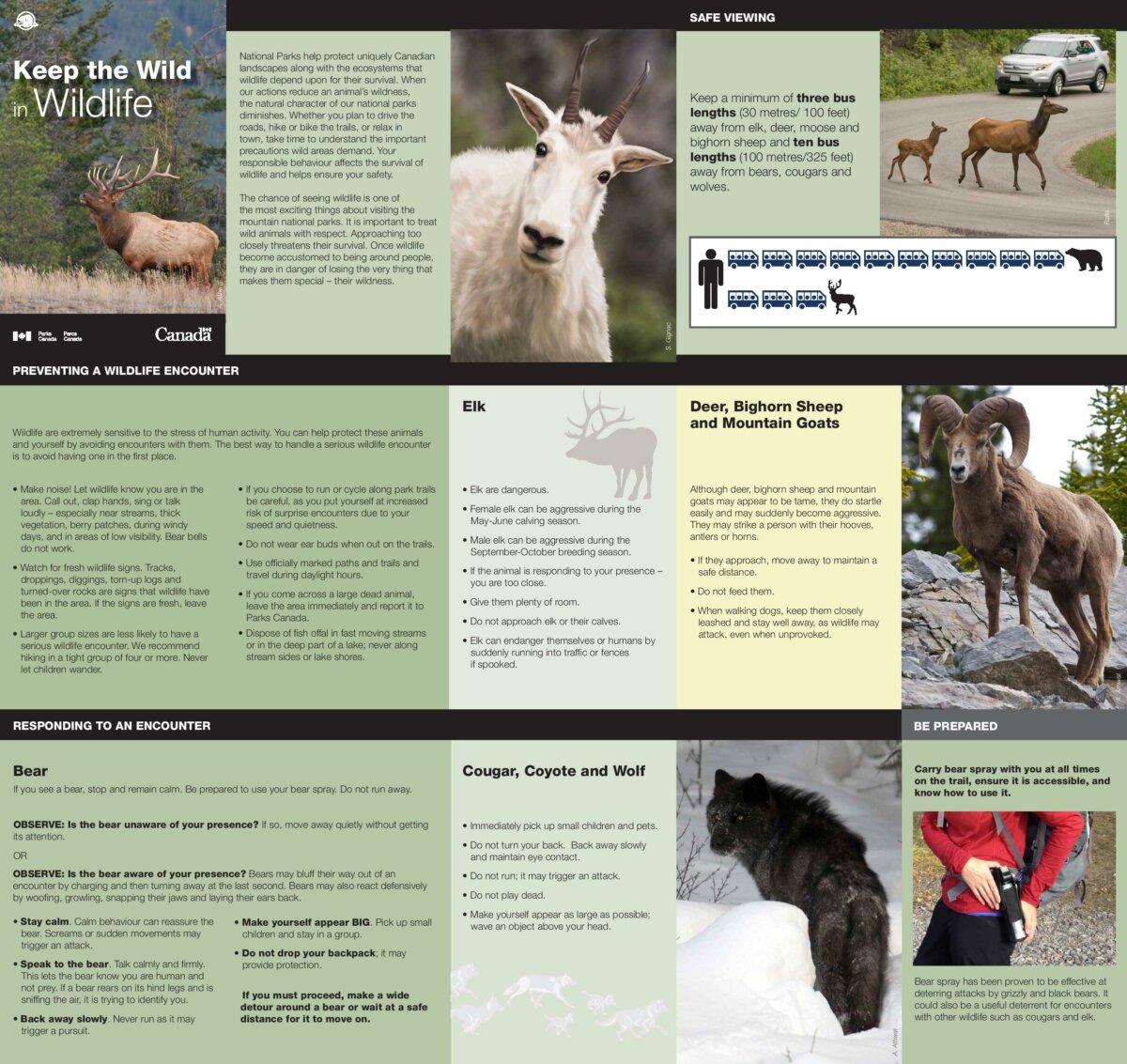
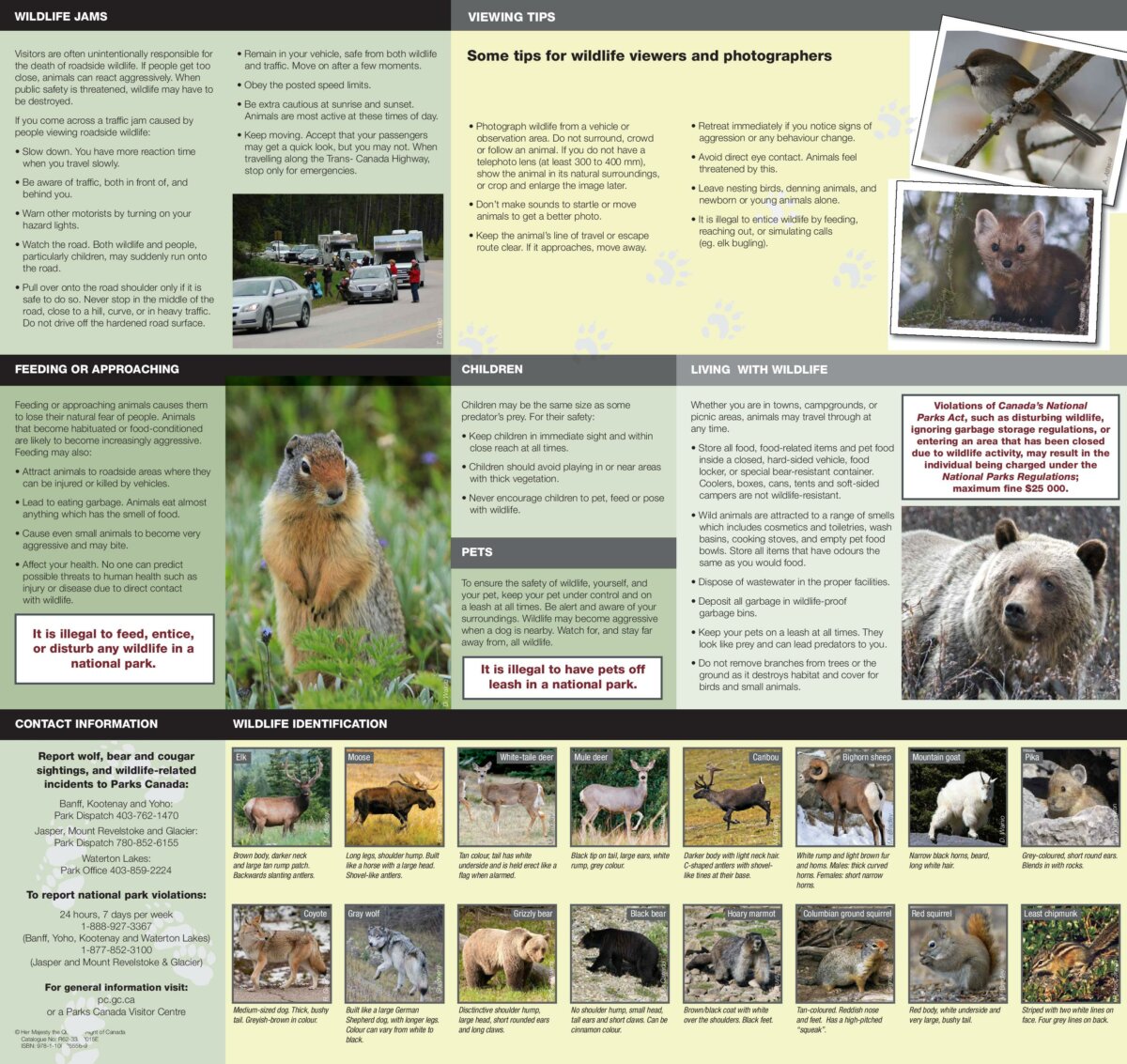
Credit: Parks Canada