 Kelowna
Four years after the Tkʼemlúps te Secwépemc First Nation revealed ground-penetrating radar results pointing to 215 possible graves at the former Kamloops Indian Residential School, Canadians remain sharply divided over what the findings mean.
Credit: Angus Reid Institute
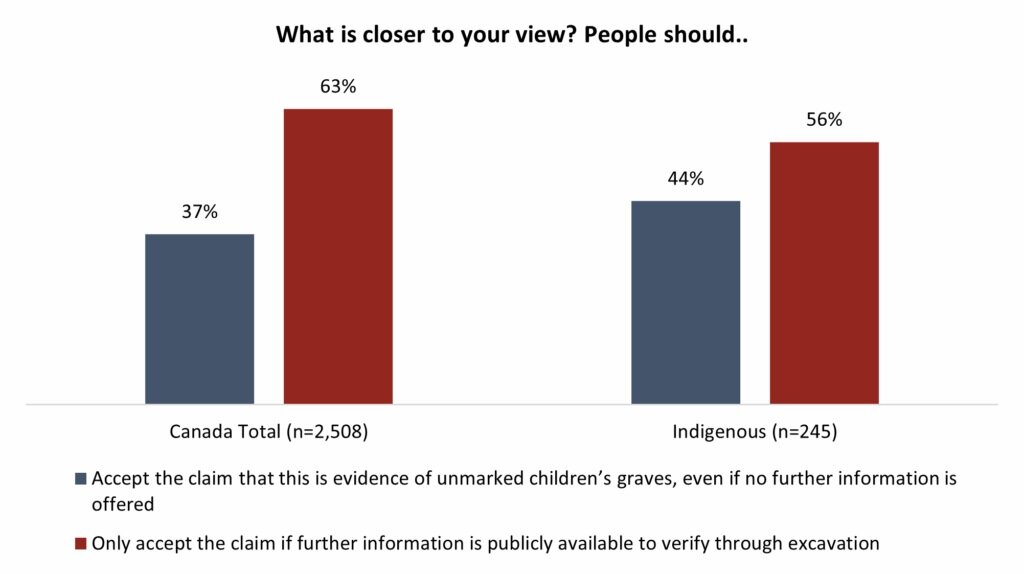
An Angus Reid Institute poll conducted July 24–29, 2025, found that 63% of respondents and 56% of Indigenous participants believe further evidence, such as exhumation, is necessary.
To date, no human remains have been confirmed at the site, despite $12.1 million in federal funding to support the investigation.
The discovery in 2021 drew global attention, prompted national mourning, and spurred similar searches across the country. While initial reports referred to “unmarked graves,” the terminology has shifted to “anomalies” or “plausible burials” as the work continues under the guidance of survivors and families.
Public awareness is high—77% nationwide have followed the Kamloops story, rising to 88% in British Columbia. But perspectives vary by age and gender.
Credit: Angus Reid Institute
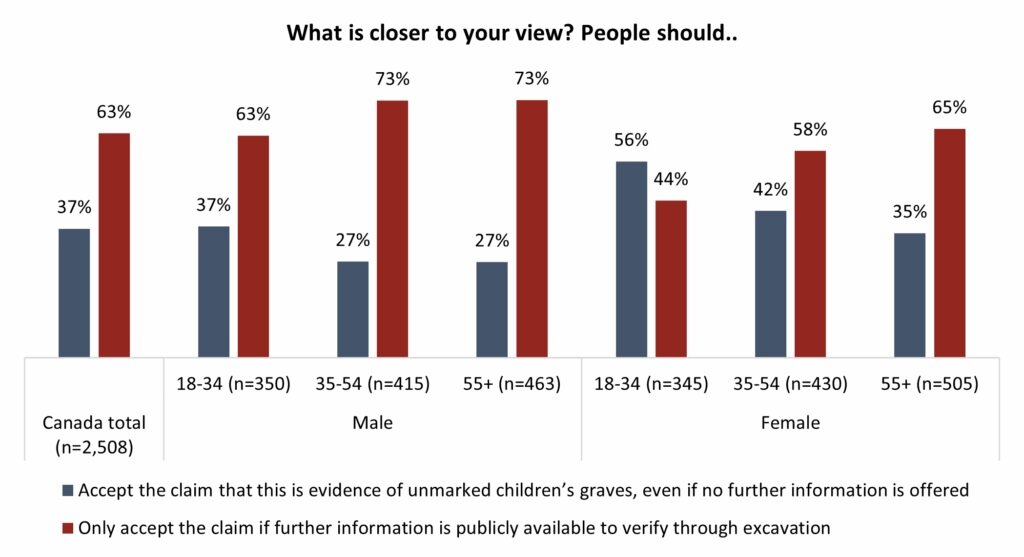
Generational and gender divides are notable: younger women are the most likely to accept the Kamloops claims without further evidence, while men over 34 show greater skepticism.
The poll also reveals strong acknowledgment of the harm inflicted by the residential school system: 68% agree with the Truth and Reconciliation Commission’s description of the schools as “cultural genocide,” and 54% believe their damaging legacy persists. Between 1883 and 1996, roughly 150,000 Indigenous children—about one-third of Indigenous youth—were forced to attend such institutions.
Credit: Angus Reid Institute
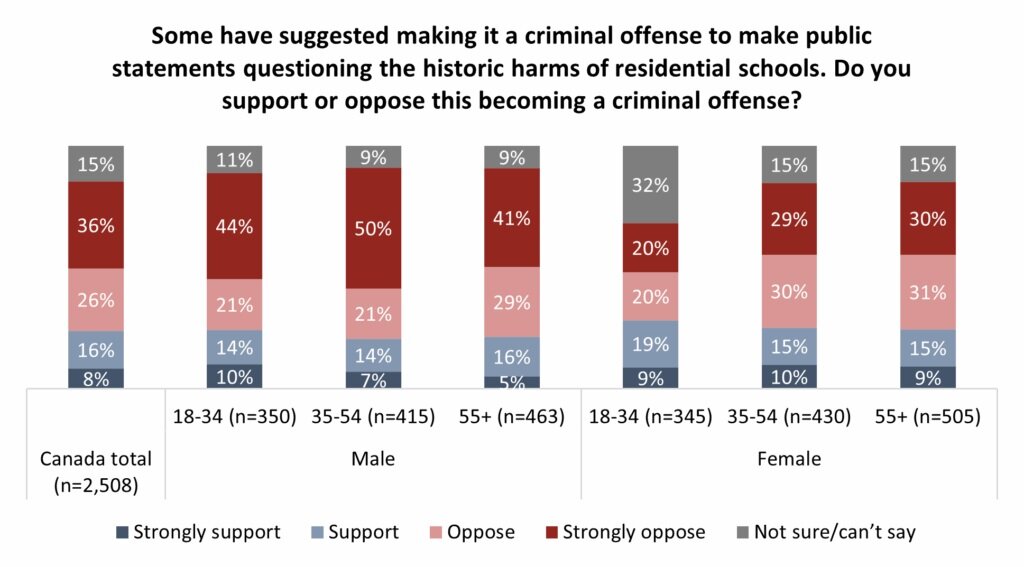
However, calls to criminalize “residential school denialism” remain unpopular, with 62% opposed, though many support political resignation in cases of public dismissal of survivors’ accounts.
The poll surveyed 2,508 Canadian adults online, weighted to match census demographics. For comparison purposes, a probability sample of this size would carry a margin of error of ±1.5 percentage points, 19 times out of 20. Of these, 245 respondents self-identified as Indigenous, a proportion weighted to represent 5% of the national population, offering insights but not a definitive measure of all Indigenous perspectives.


