 Toronto
The Consumer Price Index (CPI) rose by 1.6% in September on a year-over-year basis, down from the 2.0% increase recorded in August, making it the smallest yearly gain since February 2021, says Statistics Canada in its monthly Consumer Price Index report.
Per Statistics Canada, the decline was primarily driven by a significant drop in gasoline prices, which fell 10.7% year-over-year in September compared to 5.1% in August. Excluding gasoline, the CPI increased by 2.2%, consistent with August’s figure.
Despite the slower rate of inflation, price levels remain elevated finds the report.
Since September 2021, the CPI has risen by 12.7%, with Canadians continuing to face higher costs for essentials like rent (+21.0%) and groceries (+20.7%) over the past three years.
Here are the highlights of the monthly report from Statistics Canada:
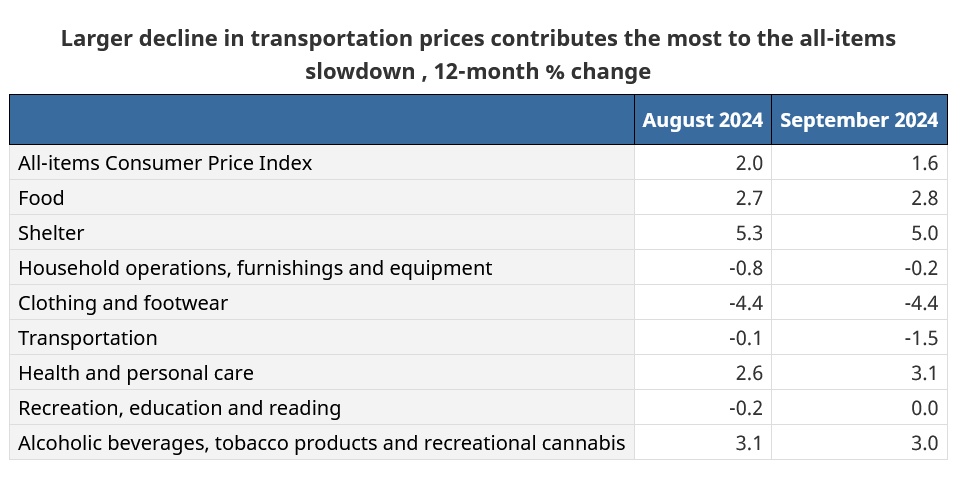
- Gasoline prices: Decreased by 10.7% year-over-year in September, compared to a 5.1% drop in August. On a monthly basis, gasoline prices fell 7.1%.
- Fuel prices: Prices for fuel oil and other fuels dropped by 22.0% year-over-year, following a 10.2% decrease in August.
- Rent: Rent prices increased by 8.2% year-over-year, a slower rise compared to August’s 8.9%. Newfoundland and Labrador saw a 5.1% increase, while New Brunswick and British Columbia experienced growth of 10.1% and 7.3%, respectively.
- Air transportation: Airfare costs decreased by 4.4% year-over-year in September, with a 14.3% drop from August due to seasonal trends after the summer travel season.
- Groceries: Food prices from stores rose by 2.4% in September, maintaining the same pace as in August. Prices for some items like seafood and nuts dropped, while others, such as beef (+9.2%) and edible oils (+7.8%), continued to rise.
- Tuition fees: Increased by 1.8% in 2024, a slower rate compared to the 2.5% rise in 2023, particularly in Alberta, where tuition fees rose by 2.3%.
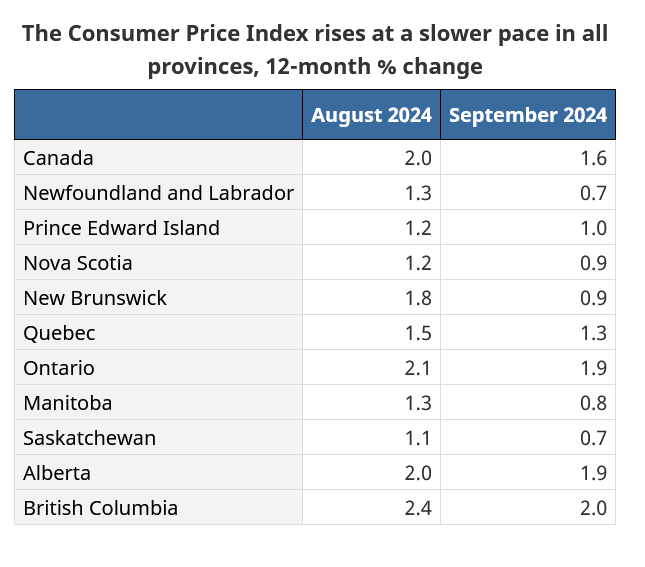
Inflation also slowed across all provinces, with overall price increases moderating compared to August.
The measures of core inflation, CPI-trim and CPI-median, which the Bank of Canada uses as one of the factors to determine the interest rate, are reduced at a lower rate and hover around 2.4% and 2.3%, respectively, same as August figures.
CPI-trim and CPI-median are core inflation measures that exclude extreme price changes. CPI-trim removes the outer 40%, while CPI-median focuses on the median price change.
The next scheduled date for announcing the overnight rate target is Wednesday, October 23, 2024.


