 Calgary
A new national assessment suggests Canada may fall short of its plan to eliminate cervical cancer by 2040, as progress that once showed steady improvement has levelled off.
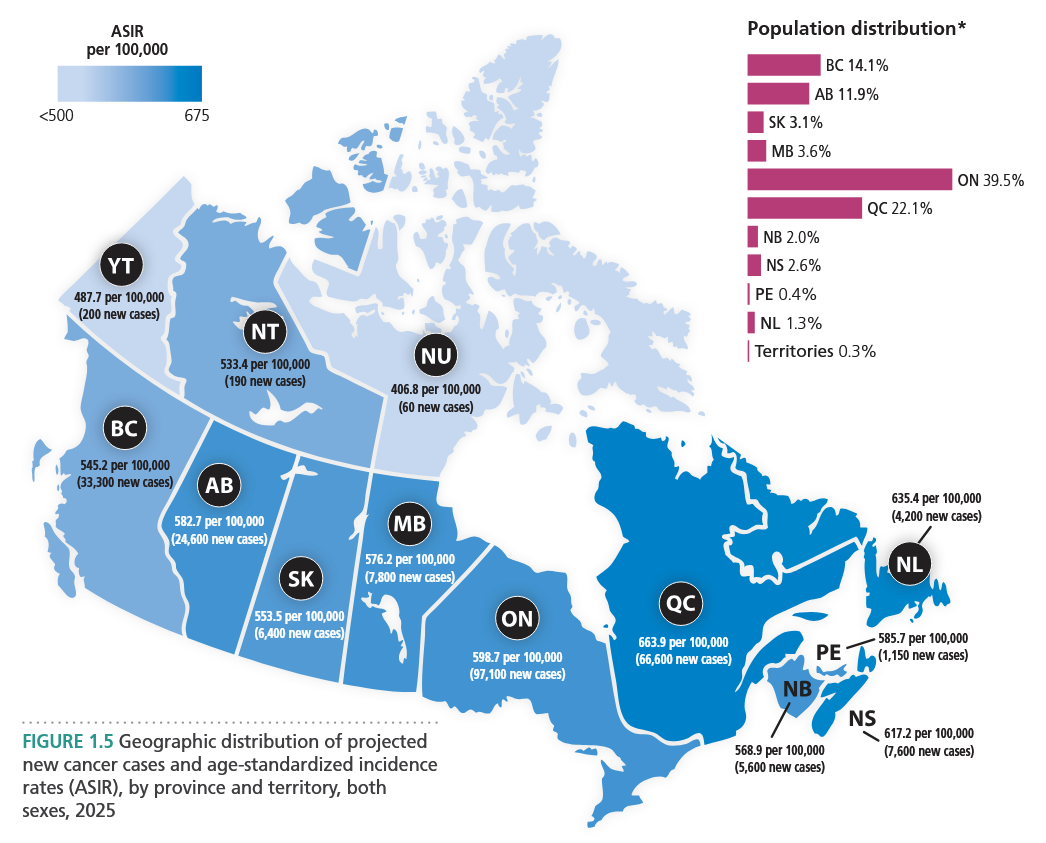
Canadian Cancer Statistics 2025 Report/Credit: Canadian Cancer Society
The findings appear in the Canadian Cancer Statistics 2025 report, released by the Canadian Cancer Society (CCS) on Cervical Cancer Elimination Day of Action, and developed with Statistics Canada, the Public Health Agency of Canada, and the Canadian Cancer Statistics Advisory Committee.
Cervical cancer develops in cells of the cervix, the lower part of the uterus, and is caused in almost all cases by HPV infection. Squamous cell carcinoma is the most common form. Risk can increase with factors such as smoking, multiple pregnancies, and inconsistent access to screening. The disease is considered largely preventable through HPV vaccination and modern testing methods that detect high-risk HPV types.
The report shows that cervical cancer incidence, which declined consistently from 1984 to 2005, no longer follows a clear downward trend. Rates have fluctuated for nearly two decades, with recent data pointing to a plateau. Researchers attribute this shift partly to increased transmission of Human Papillomavirus (HPV), reduced participation in vaccination and screening programs, and gaps in follow-up care. Dr. Jennifer Gillis, CCS Director of Surveillance, said the stalled trend indicates the need for closer monitoring and stronger prevention efforts.
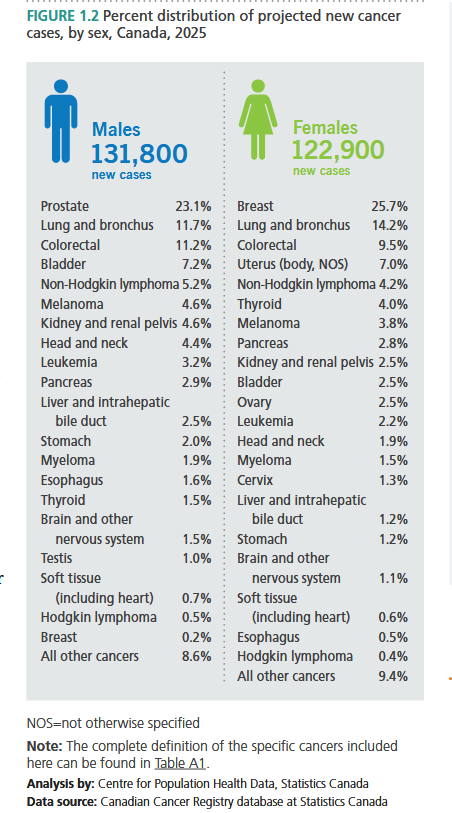
Canadian Cancer Statistics 2025 Report/Credit: Canadian Cancer Society
Canada adopted the World Health Organization’s global elimination strategy in 2020, but the report notes uncertainty about whether national targets can be met and sustained. An estimated 1,650 people in Canada will be diagnosed with cervical cancer in 2025, and 430 are expected to die from it.
While HPV testing is gradually replacing Pap tests across provinces, progress is uneven. British Columbia has implemented at-home self-collection, while other regions remain early in the transition. Lab capacity constraints, workforce shortages, and limited primary-care access continue to slow rollout. Vaccination rates also vary widely, from 16% to 93% depending on jurisdiction; only Newfoundland surpasses the 90% threshold considered necessary for elimination.
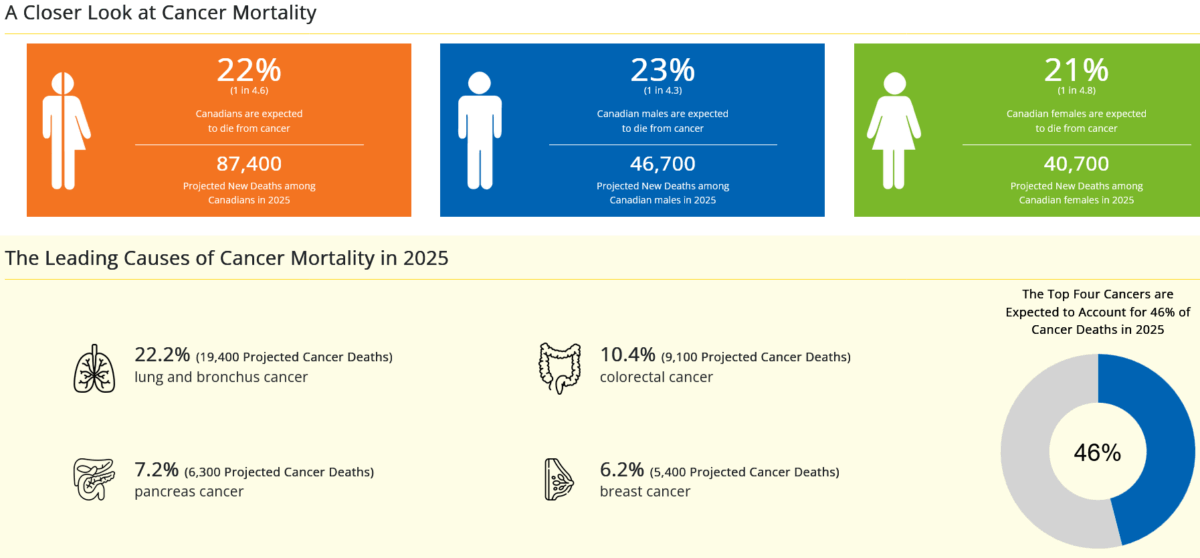
The broader report projects 254,800 new cancer diagnoses and 87,400 cancer deaths in Canada in 2025, with lung cancer expected to account for 22% of mortality.


