Toronto
Coming up – a total lunar eclipse!
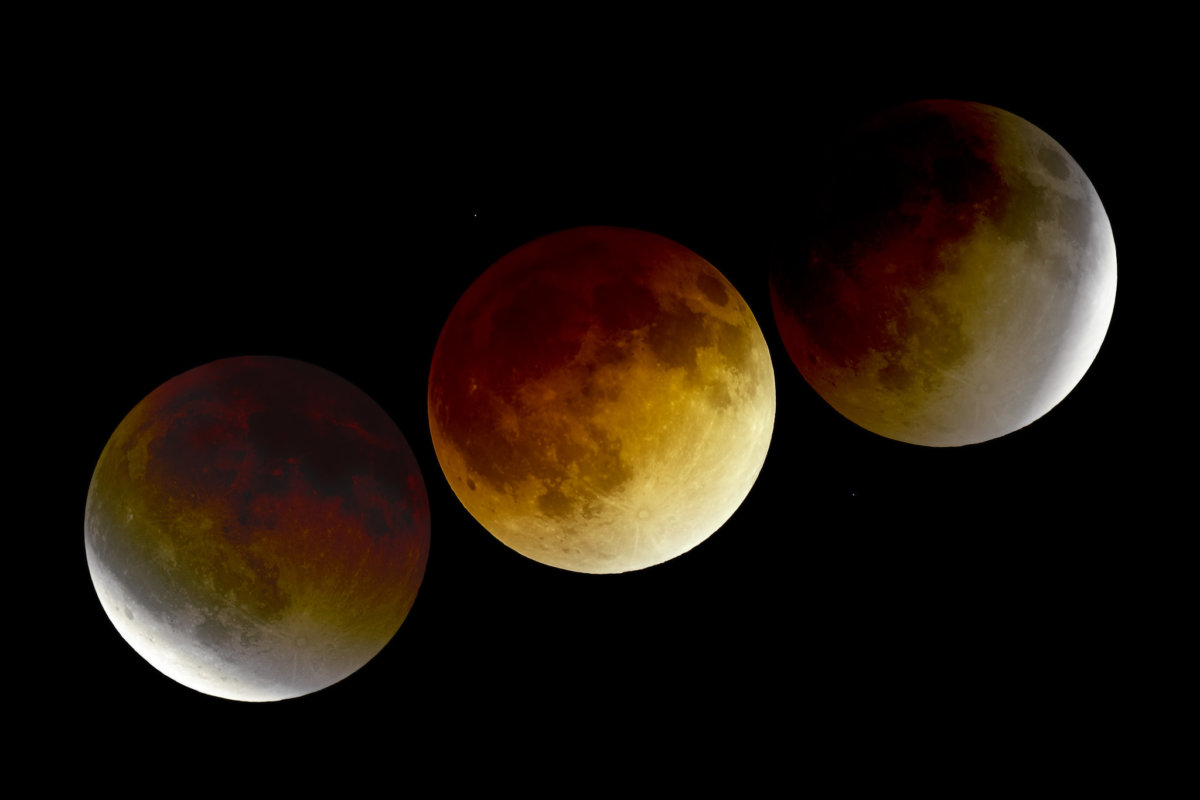
Weather permitting, you can experience a total lunar eclipse on the morning of November 8th. The best part is, you will be able to see the eclipse irrespective of your location in Canada.
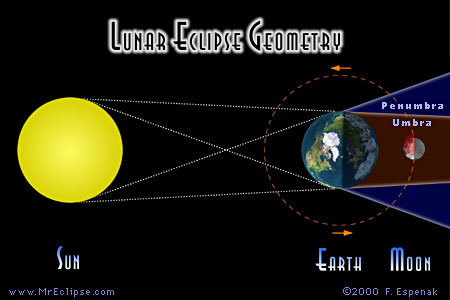
A lunar eclipse occurs when Earth’s shadow blocks the sun’s light causing the moon to appear dark. During a lunar eclipse, the full moon, sun, and the earth align with the earth in the middle. During a total lunar eclipse, the entire Moon will lie within the umbra, the darkest part of Earth’s shadow.
Why is it called a Beaver Blood Moon:
The November full moon is called a Beaver moon to indicate beavers preparing for the winter and the name is used by many indigenous peoples across North America.
During a total lunar eclipse, the Moon will have a reddish hue, due to which it is called a ‘Blood Moon’. This is due to the scattering of light by the Earth’s atmosphere, a phenomenon known as Rayleigh scattering (Rayleigh scattering is also the reason the sky appears blue). Blue light (shorter wavelength) is scattered away, while the longer wavelength red, orange, and yellow light pass through the Earth’s atmosphere making the Moon appear red.
Hence the name, Beaver Blood Moon.
When is the lunar eclipse:
Date: Early morning hours of November 8, 2022
The lunar eclipse will be visible across North and Central America as well as in other parts of the world including Colombia, Asia, Australia, and New Zealand and western portions of Venezuela and Peru. According to NASA, viewers in Alaska and Hawaii can see every stage of the eclipse.
The eclipse will last a maximum of 3 hours and 40 minutes.
Newfoundland Time (NST): Partial Eclipse Begins: 5:39 am; Total Eclipse Begins: 6:46 am; Maximum Eclipse: 7:29 am; Total Eclipse Ends: 8:11 am; Partial Eclipse Ends: 9:19 am
-
- In St. John’s: The maximum viewable eclipse is at 6:51 am as the sun rises at 6:55 am and the moon sets at 6:59 am. The moon is close to the horizon and hence you will have to be at a high point to see the beginning of the total eclipse.
Atlantic Time (AST): Partial Eclipse Begins: 5:09 am.; Total Eclipse Begins: 6:16 am; Maximum Eclipse: 6:59 am; Total Eclipse Ends: 7:41 am; Partial Eclipse Ends: 8:49 am
-
- In Fredericton: The moon sets at 7:23 am. The moon is close to the horizon during the maximum eclipse; you will have to be at a high point to see the moon during the total eclipse. The sunrise is at 7:17 am.
- In Charlottetown: The sun rises at 6:55 am and the moon sets at 7:09 am. The moon is almost at the horizon during maximum eclipse, making it difficult to see.
- In Halifax: The moon sets at 7:06 am. The moon is almost at the horizon during maximum eclipse, making it difficult to see. The sunrise is at 7:01 am.
Eastern Time (EST): Partial Eclipse Begins: 4:09 am; Total Eclipse begins: 5:16 am; Maximum Eclipse: 5:59 am; Total Eclipse ends: 6:41 am; Partial Eclipse Ends: 7:49 am
-
- In Ottawa: The moon sets at 6:59 am after the total eclipse but before the partial eclipse ends. The sun rises at 6:51 am.
- In Quebec City: The moon sets at 6:45 am after the total eclipse but before the partial eclipse ends.
- In Toronto: The moon sets at 7:10 am after the total eclipse but before the partial eclipse ends.
- In Iqaluit: The moon sets at 7:55 am.
Central Time (CST): Partial Eclipse Begins: 3:09 am; Total Eclipse begins: 4:16 am; Maximum Eclipse: 4:59 am; Total Eclipse ends: 5:41 am; Partial Eclipse Ends: 6:49 am.
-
- In Winnipeg: The moon sets at 7:43 am before the penumbral eclipse but after the partial eclipse ends.
- In Regina: The moon sets after the penumbral eclipse ends.
Mountain Time (MST): Partial Eclipse Begins: 2:09 am; Total Eclipse begins: 3:16 am; Maximum Eclipse: 3:59 am; Total Eclipse ends: 4:41 am; Partial Eclipse Ends: 5:49 am.
-
- In Edmonton, Whitehorse and Yellowknife: The moon sets after the penumbral eclipse ends.
Pacific Time (PST): Partial Eclipse Begins: 1:09 am; Total Eclipse begins: 2:16 am; Maximum Eclipse: 2:59 am; Total Eclipse ends: 3:41 am; Partial Eclipse Ends: 4:49 am.
-
- In Vancouver: the moon sets after the penumbral eclipse ends.
How to watch the lunar eclipse:
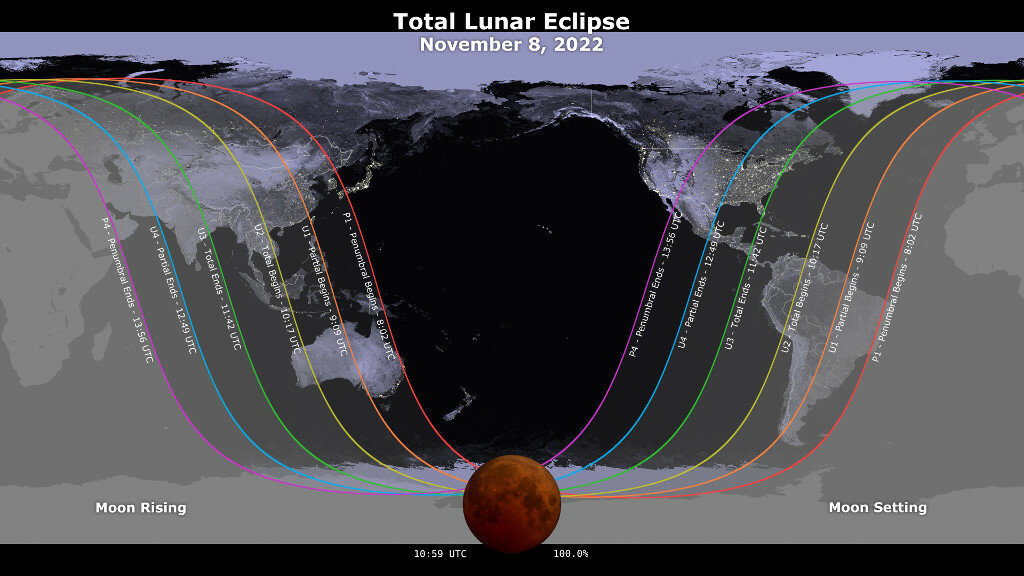
Contours mark the edge of the visibility region at eclipse contact times. Credit: NASA Goddard Space Flight Center/Scientific Visualization Studio
November 8th lunar eclipse can be viewed from almost all of Canada. Viewers in Newfoundland will likely not be able to see the blood moon as the moon will set before it turns completely red. You can also catch the live streams of the eclipse.
Watching a lunar eclipse is a safe activity. Look west/northwest with the naked eye to see the lunar eclipse. You can also use binoculars or a small telescope for a clearer view. Move away from city lights or other light sources for the best view.
This will be the last total lunar eclipse to occur in the next couple of years from Canada. While two to four lunar eclipses take place in a typical year, the next total lunar eclipse visible from Canada will be on March 14, 2025.