 Calgary
A new report by the Fraser Institute reveals that Alberta contributed a net $53.6 billion to the Canada Pension Plan (CPP) between 1981 and 2022—over six times more than any other province.
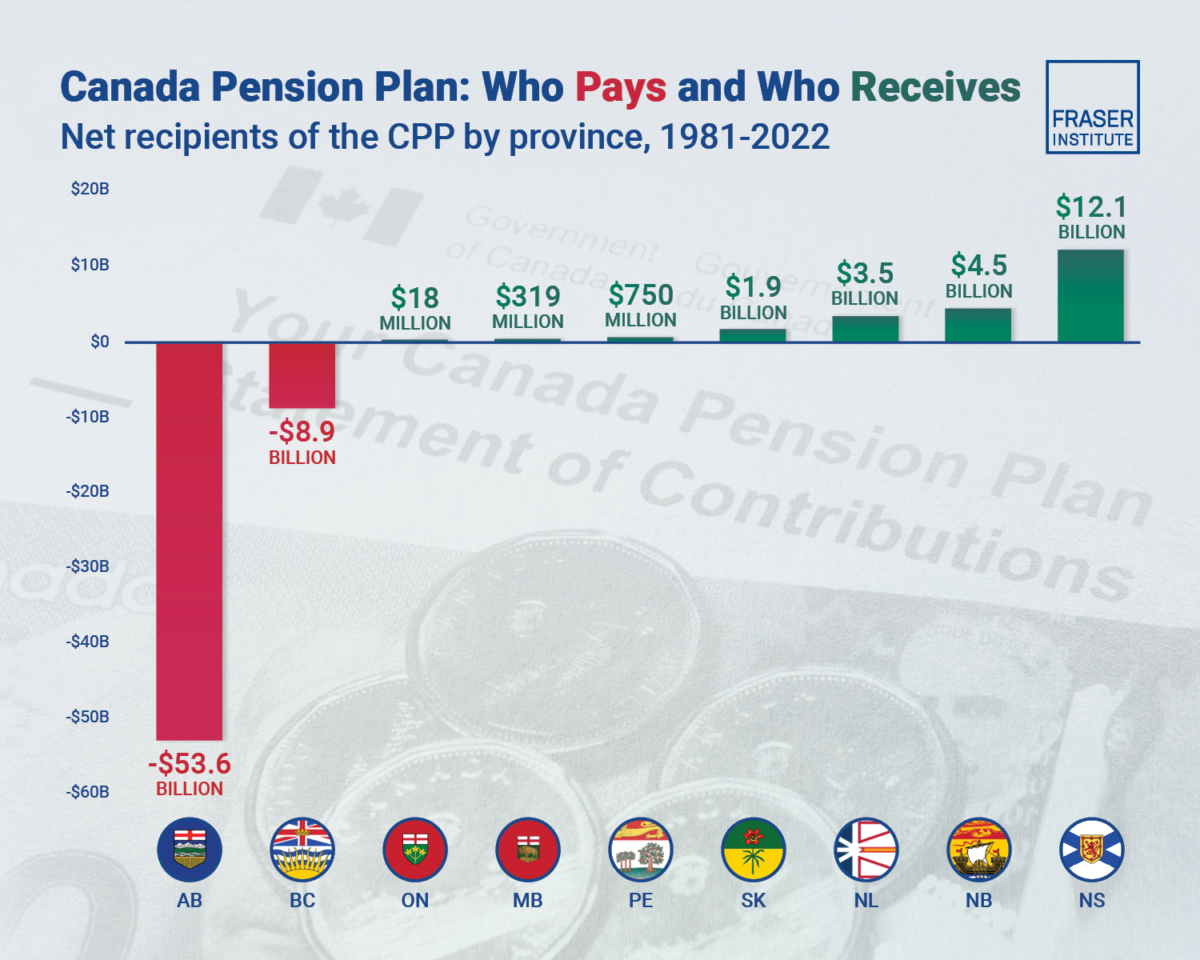
The analysis, released by the public policy think-tank, highlights Alberta’s outsized role in funding national programs, including CPP, employment insurance, and equalization.
According to the report, Alberta workers contributed an average of 14.4% of total CPP premiums, while only 10% of CPP benefits went to Alberta retirees. British Columbia was the only other province with a net positive contribution, at just $8.9 billion.
The significant contributions are attributed to Alberta’s younger population, higher employment rate, and higher incomes. Between 1976 and 2022, Alberta’s employment rate averaged 67.4%, compared to 59.7% in the rest of Canada. Albertans also had an average annual market income of $52,328—$10,918 more than the rest of the country.
The report also notes that Alberta has not received equalization payments since 1964 and estimated that Alberta taxpayers contributed $3 billion to the program in 2022 alone.
Similarly, Alberta’s net contribution to Employment Insurance from 2007 to 2022 totaled $7.5 billion. From 2007 to 2022, Albertans paid 13.4% of EI premiums while receiving just 11.2% in benefits.
The report suggests that if Alberta were to withdraw from the CPP and create a separate provincial pension plan, workers in the province could maintain similar retirement benefits at a lower contribution rate. Estimates for Alberta’s potential standalone pension contribution range from 5.85% to 8.2%, compared to the national CPP rate of 9.9%. Meanwhile, contribution rates for the rest of Canada would likely rise to offset Alberta’s absence.
Given demographic projections showing Alberta will continue to have the highest share of working-age individuals and the lowest proportion of seniors through 2048, the report concludes that Alberta’s outsized role in funding federal programs is likely to persist for the foreseeable future.


