 Toronto
Have you ever wondered where you need to live to enjoy the least income tax, especially if you work from home?
Fraser Institute, an independent non-partisan think tank, has published a report comparing marginal provincial tax in each of the ten provinces.

The report details how much residents of each province take home even with the same level of income after analyzing different marginal and effective tax rates.
The marginal tax rate is the tax rate in the tax bracket you are in and the effective tax rate is the average rate of tax you pay.
The report finds Atlantic Canadians who earn the national average income pay much higher provincial personal income tax burdens—sometimes almost double—than Western Canadians earning similar amounts.
- This is How Much More Personal Income Tax Canadians Pay Than Americans
- Median After-Tax Income in Canada According to 2021 Census
Fraser Institute
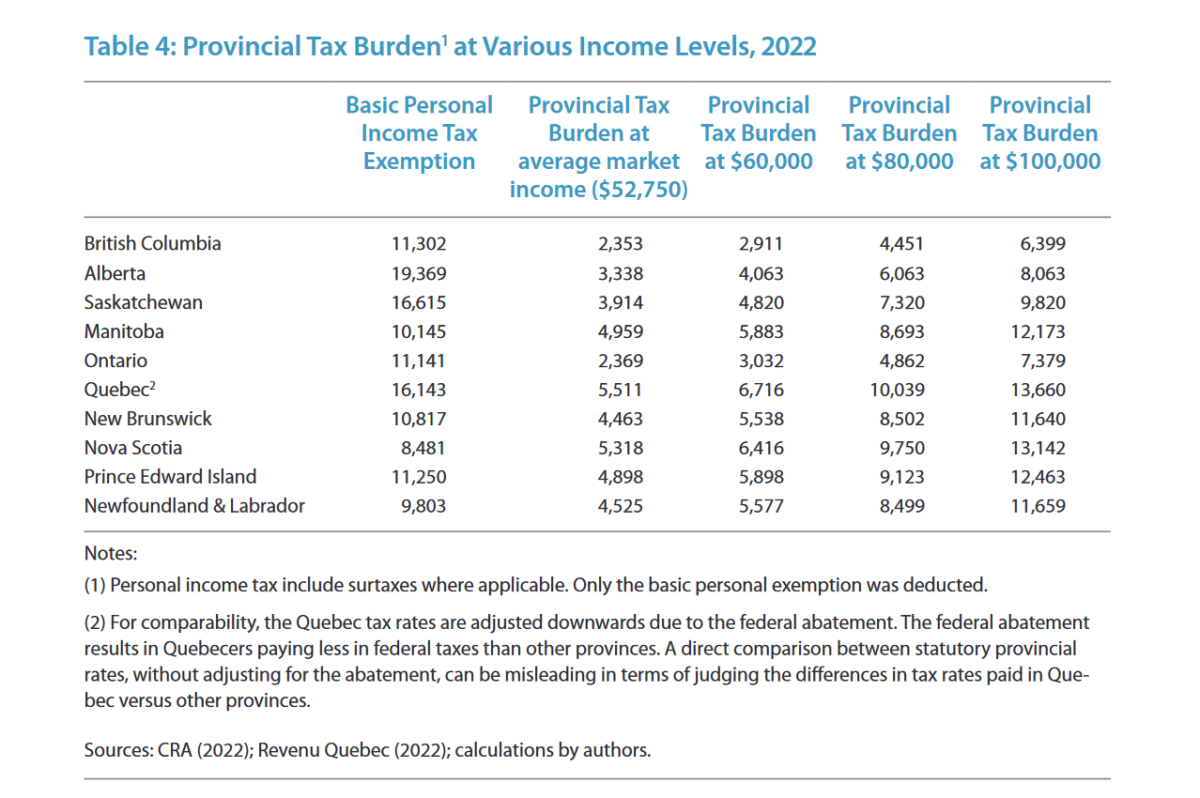
Comparing provincial taxes on the 2022 average market income of Canada ( $52,750), the Fraser Institute says residents of Quebec and Atlantic provinces pay the highest marginal provincial rate ranging from 13.80 percent in Prince Edward Island to 16.62 percent in Quebec. Ontarians and Western Canadians pay an average of 7.70 to 12.75 percent.
The provincial tax burden for an individual at the average income level in British Columbia is $2,353, $2,369 in Ontario, and $3,338 in Alberta. By comparison, the provincial tax burden in the Atlantic provinces at this income level ranges from $4,463 in New Brunswick to $5,318 in Nova Scotia. This means that an Ontarian who earns $52,750 saves $3142 more than a Quebecois who earns the same amount in Quebec.
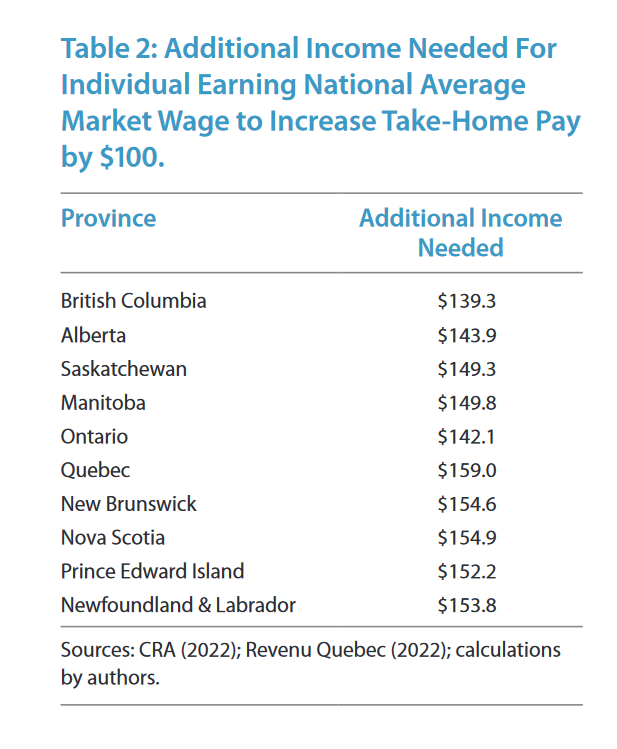
Fraser Institute further analysed how much individuals across Canada need to earn over $52,750 to increase their after-tax income by $100. For example, a British Columbian must earn $139 to increase their take-home pay by $100. In Nova Scotia and New Brunswick, that figure is $155 and in Quebec, it is $159. In other words, a Nova Scotian must earn $16 more than a British Columbian to increase their take-home pay by the same $100.
Fraser Institute
Western Canadians who earn average income don’t face those levels of provincial personal income tax rates until their income reaches $150,000 in British Columbia and $500,000 in both Alberta and Saskatchewan.
As income increases, British Columbia, Alberta and Saskatchewan offer better tax rates than the rest of the Canadian provinces. At $100,000 of income an individual in the three western-most provinces faces an overall provincial tax burden ranging from $6,399 in British Columbia to $9,820 in Saskatchewan. In Atlantic Canada, the provincial tax burden at this income level ranges from $11,640 in New Brunswick to $13,142 in Nova Scotia.

Fraser Institute
Alberta and Saskatchewan offer competitive rates for top income earners while British Columbians pay the least effective provincial tax for most low to mid-high income earners.
A detailed study is available here – Comparing Provincial Marginal Tax Rates for Middle-Income Earners Across Canada








Do not describe the Fraser Institue as “independent non-partisan”.