 Calgary
Canada’s population growth has reached a historic high, primarily driven by robust immigration, according to Statistics Canada.
According to Statistics Canada’s 2023 third quarter population estimate report, the population stood at 40,528,396, marking an increase of 430,635 people (1.1%) since July 1 as of October 1, 2023. Canada reached a population of 40 million on June 16th of this year.
Statistics Canada says this surge is the highest since the second quarter of 1957 when the population expanded by 198,000 due to a post-war baby boom and an influx of refugees following the Hungarian Revolution.
By the end of September 2023, Canada’s population had grown by 1,030,378 people, surpassing any previous full-year growth since the country’s Confederation in 1867.
The growth rate in Alberta, Prince Edward Island, and Ontario outpaced the national average, while the Northwest Territories experienced a decline.
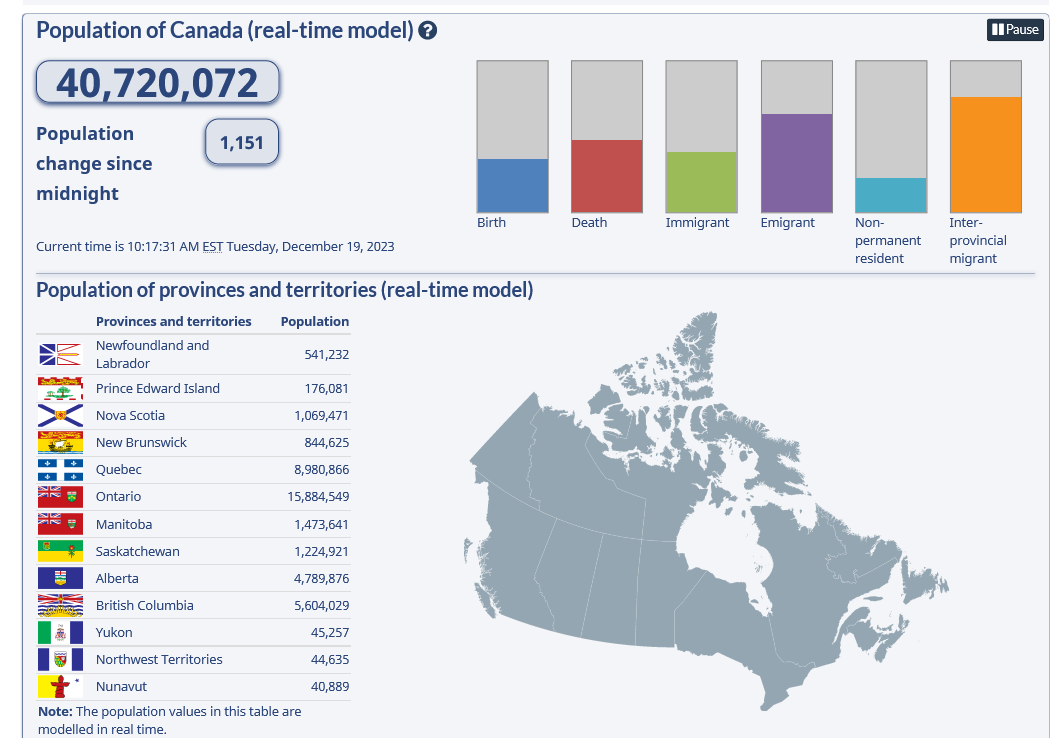
Credit; Canada’s population clock (real-time model)/Statistics Canada
International migration is the dominant factor in this growth, accounting for 96% of the increase. Natural increase, the balance of births over deaths, contributed just 4% and is expected to remain a minor factor due to aging demographics and lower fertility rates. Canada admitted 107,972 immigrants in the third quarter, reaching nearly 80% of its 465,000 immigrant target for the year.
The number of non-permanent residents also rose significantly, with a record increase of 312,758 in the third quarter, the largest since 1971. This growth is largely attributed to more individuals holding work and study permits and a rise in refugee claimants.
In interprovincial migration, Alberta stands out as the primary beneficiary, registering net gains from all regions, particularly from Ontario and British Columbia. This marks the first time Alberta has seen such consistent interprovincial migration gains since records began in 1971.
In the third quarter of 2023, Alberta experienced a significant influx of international migrants, totaling 39,212, a 38.3% increase compared to the same period in 2022. Concurrently, the province received 17,094 migrants from other Canadian provinces, marking a slight decrease of 3.0% from the previous year.
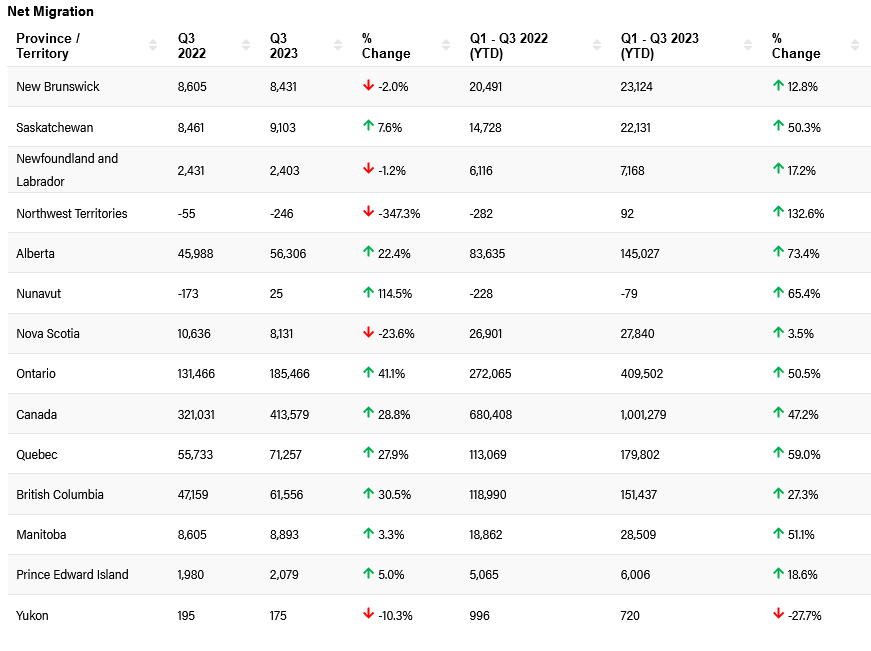
Credit: Govt. of Alberta
Conversely, British Columbia has faced migration losses for five consecutive quarters, a first since 2013. Ontario, despite ongoing net losses since early 2020, reported a smaller deficit in the third quarter of 2023.
The Atlantic provinces, which saw significant growth during the pandemic, are now experiencing minimal or negative net migration, reversing the trend of receiving migrants from Ontario. New Brunswick is the only province in the region that saw a gain of 21.
The federal government recently announced their plans to maintain an annual immigration target of 500,000.


